

Why do some muscles say Self-reported?
Muscles you tag after a guided, follow-along or cardio session show as Self-reported. They count toward recovery but never toward volume or records.
Self-reported marks muscles you tagged yourself after a guided, follow-along or cardio session. Those sessions have no weights and reps for Kinoku to read, so your tags tell it what you worked.
Tagged muscles count toward Last Trained and Recovery State on the Muscle Map. They also count in the Frequency view, which shows how often you train each muscle, and Smart Today reads them when it picks what to suggest. They never add to strength volume, tonnage or personal records (PRs), since no weight was lifted.
To stop tags from counting, turn off Guided & cardio sessions affect recovery in Settings, under Workout Experience. With the switch off, one case still counts. A built-in yoga, pilates, barre or stretching class is mobility work, so its tagged muscles still update Last Trained.
In the app
Muscle Impact (Post-Workout)
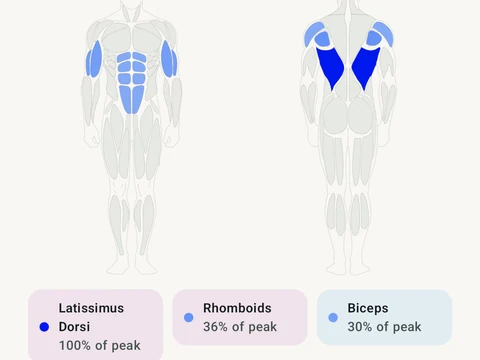
A body shape colored by this session's effort per muscle, with the top 3 muscles shown as pills.