
One private Android app for lifting, running and walking
Free, with lifts and runs in one history, for lifters on a program, runners chasing a race and walkers who love maps.
Lifters
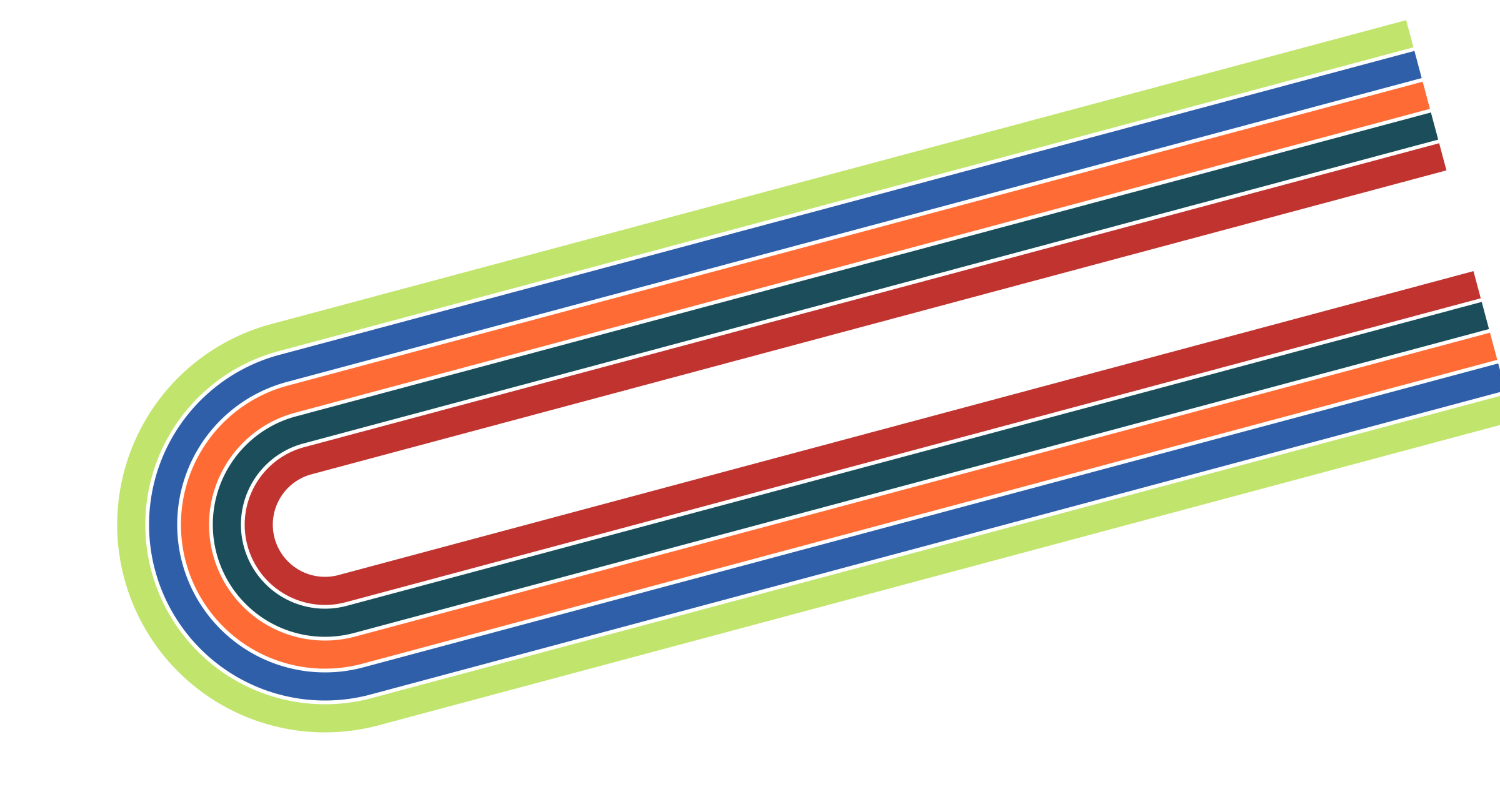
At this hour the gym is chalk and iron, and Kinoku keeps the log of every set you lift in it.
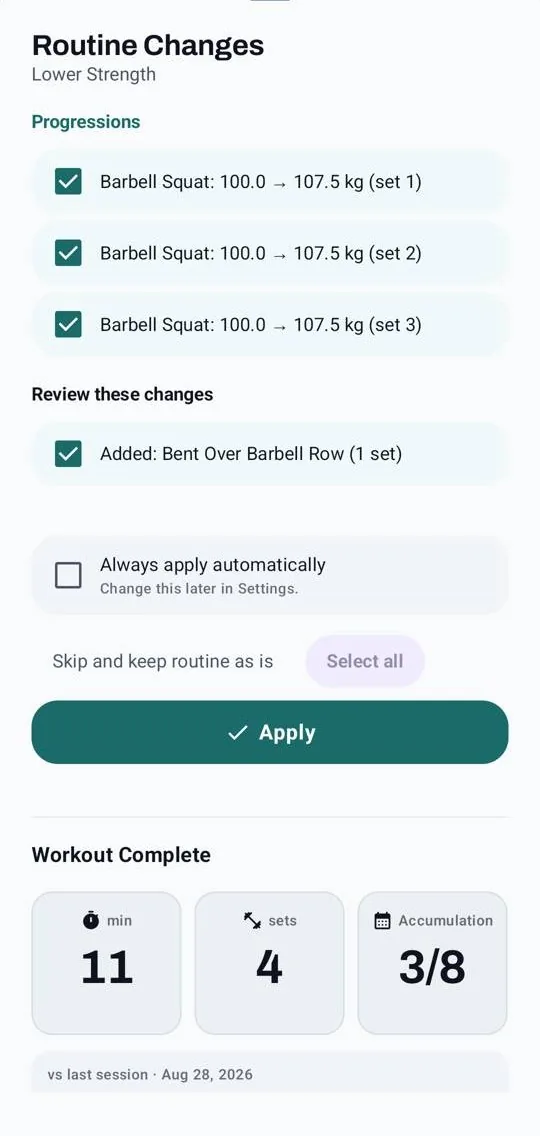
Set-by-set lifters
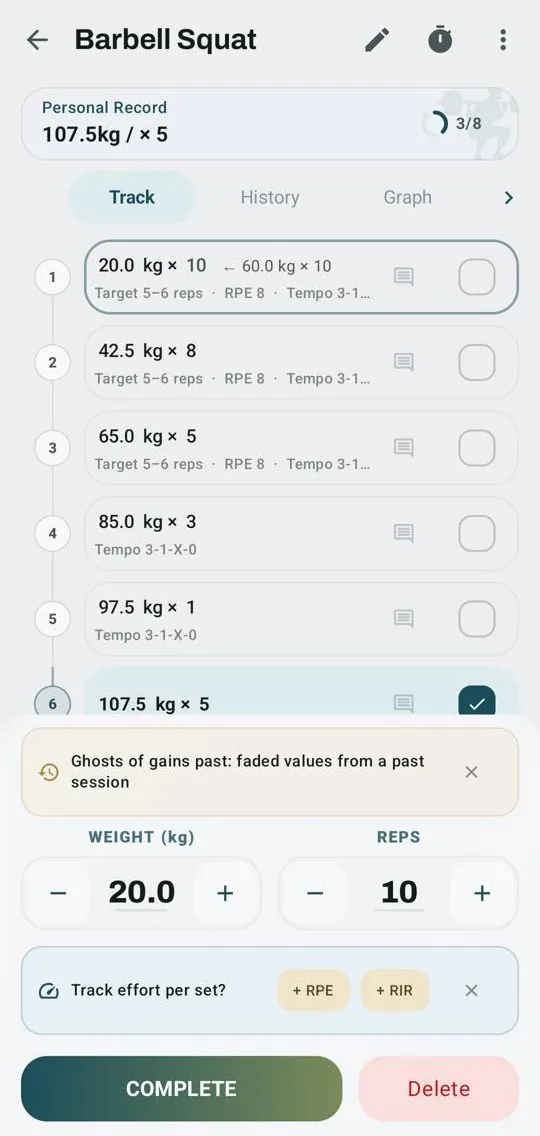
You log each set with its weight, its reps and how hard it felt, as a rate of perceived exertion (RPE) or reps in reserve (RIR). Kinoku keeps the rest timer, the warmup sets and the plate math in the same place.
- FREEWorkout LoggingCore logging
- PROWorkout LoggingPer-exercise rest times
- FREEWarmup Generator
- FREEPlate CalculatorBar loading
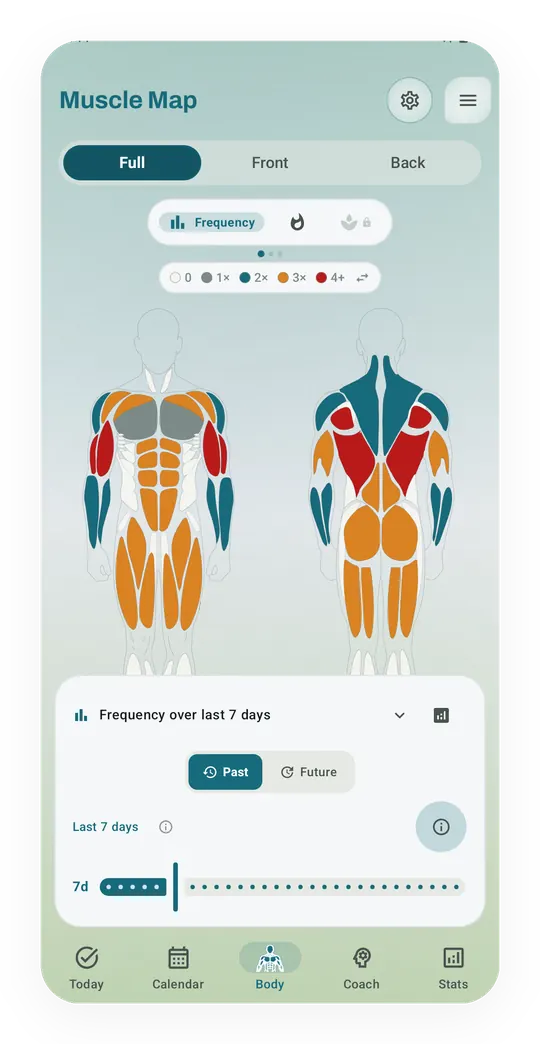
- FREEMuscle MapTraining maps
Lifters on a program
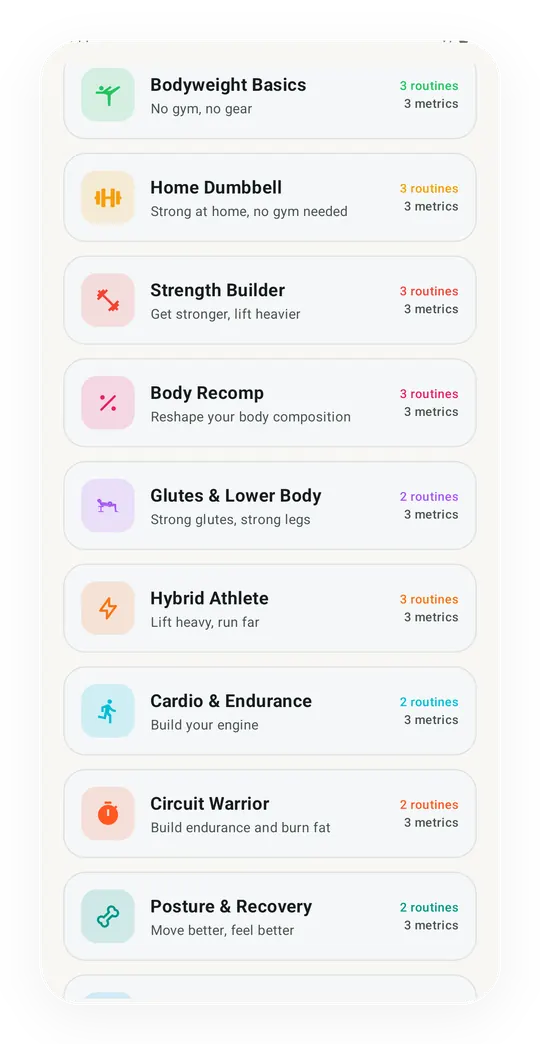
You follow a plan such as 5/3/1, nSuns or GZCLP (a beginner barbell program), and Kinoku raises the weights as you go. All 25 program templates are free, and so is the builder for a plan of your own.
- FREEPeriodizationThe whole planning stack
- FREERoutines & Programs
- FREESmart TodayToday pick and Rotation Groups
- PROPeriodizationAdaptive layer
Powerlifters
You train the squat, the bench press and the deadlift for a meet. Pro adds the published strength scores that compare lifters across body weights, and the free plan keeps the history and trend of every lift.
- PROStrength Standards
- PROPlate CalculatorCustom plate inventory
- FREELift ProgressPer-lift label
- FREEStats & ProgressCore history and trends
Lifters over 40
Longevity Mode turns on at 40 once your birth date is set, or whenever you choose, and it frames the Kinoku Score and the Coach around long-term health. The numbers under it stay the same, and the free 8-week Longevity Foundations plan comes with it.
- FREELongevity Mode
- FREEAI CoachBase coach
- FREERest Day TrackerManual + unmark
- PROMuscle MapRecovery guidance
Bar and bodyweight trainers
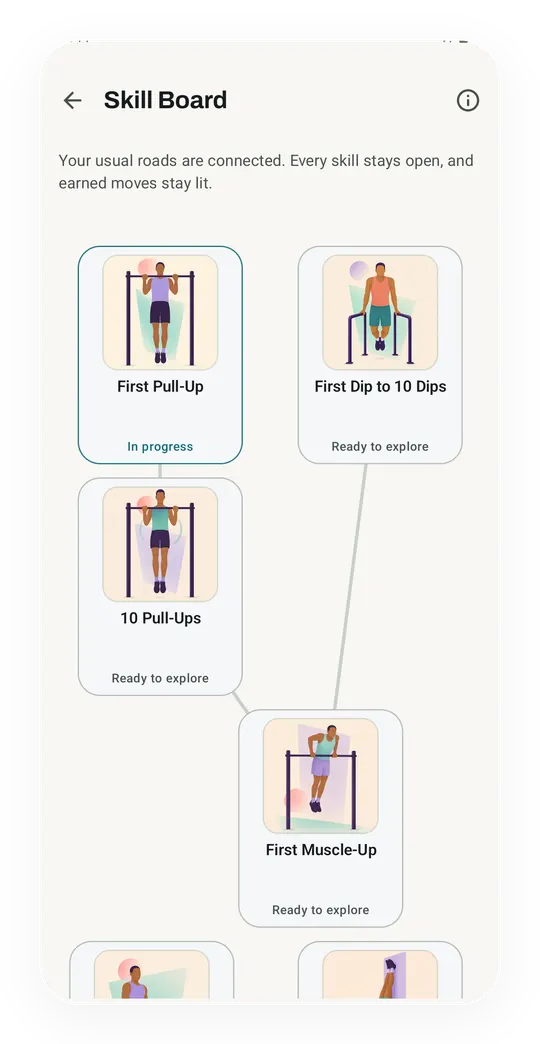
Seven free Skill Journeys lead toward moves like a first pull-up or a wall handstand. Kinoku works out the real load of each pull-up, push-up or dip from your body weight, and a follow-along video can sit on any routine you train at home.
- FREESkill Journeys
- FREEBodyweight Total LoadHonest bodyweight load
- PROBodyweight Total LoadRelative volume analysis
- FREEFollow-Along Videos
- FREEScenesBuilt-in scenes
Where it stopsKinoku has no social feed, so nobody sees a lift unless you choose to share it yourself.
More on workout logging, the free programs, Skill Journeys and a plan from your own AI.
Hybrid athletes
Between the barbell and the road sits a week of squats, tempo runs and swims, and Kinoku reads it as one week rather than two apps.

Hybrid athletes
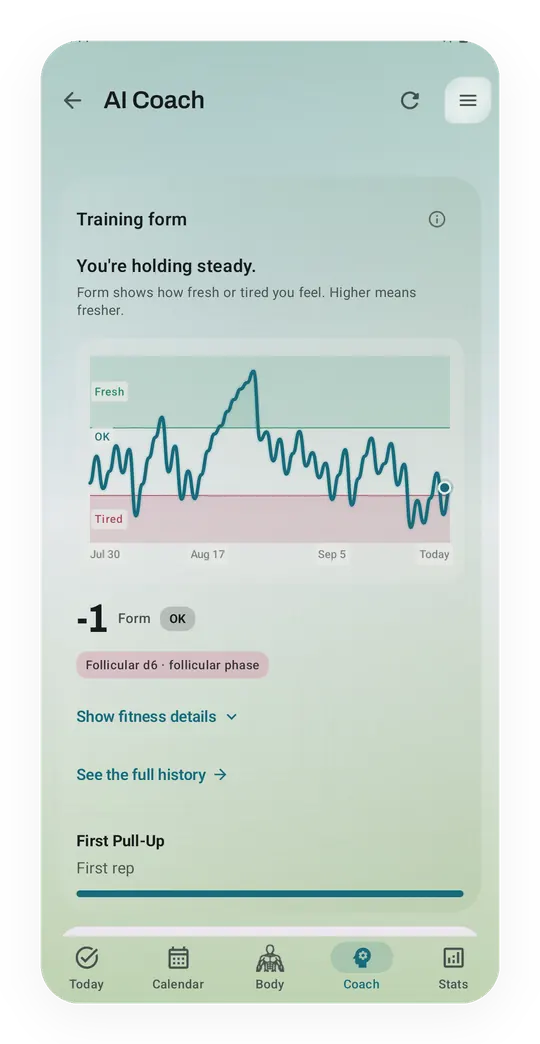
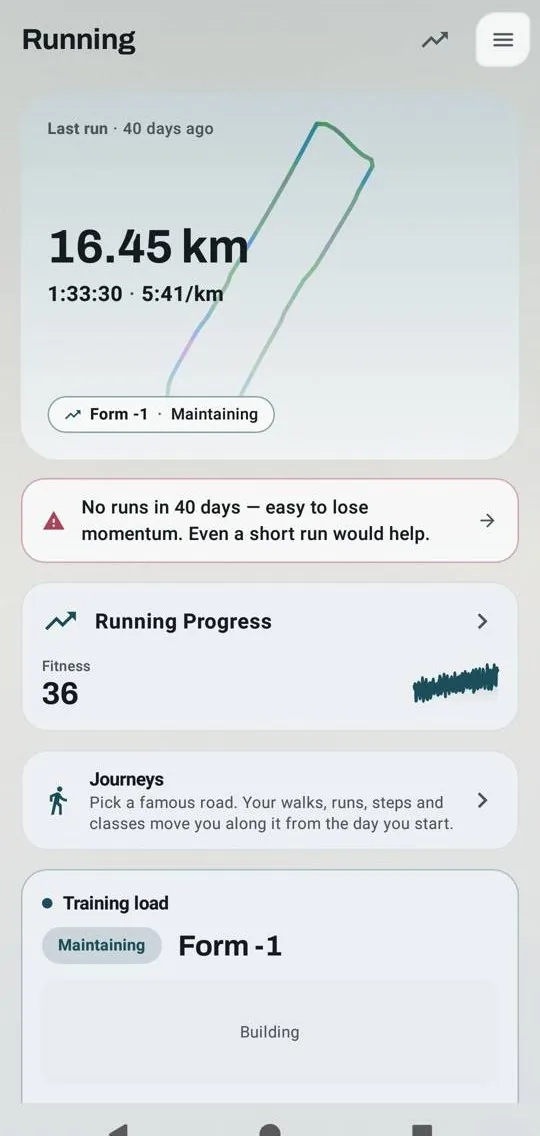
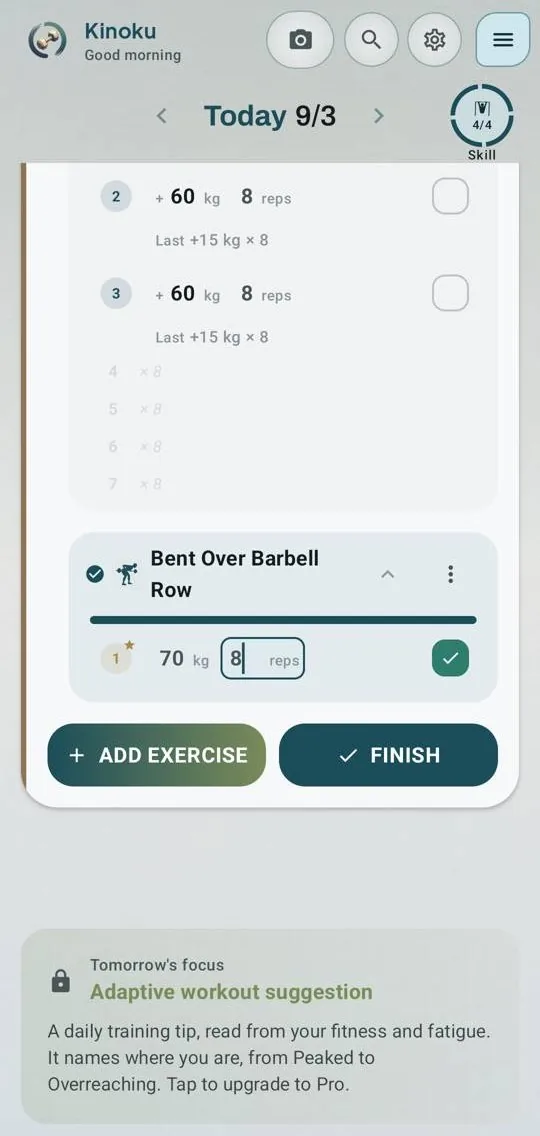
You lift and run in the same week, and sometimes you swim too. One Form curve on the Coach screen scores a squat session and a tempo run in the same units, and Smart Today names the workout you are due for next.
- FREETraining Form curve (Coach screen)Base curve
- FREESmart TodayToday pick and Rotation Groups
- FREESwim Training
- FREEStepsDaily basics
- PROForm Band
Week planners
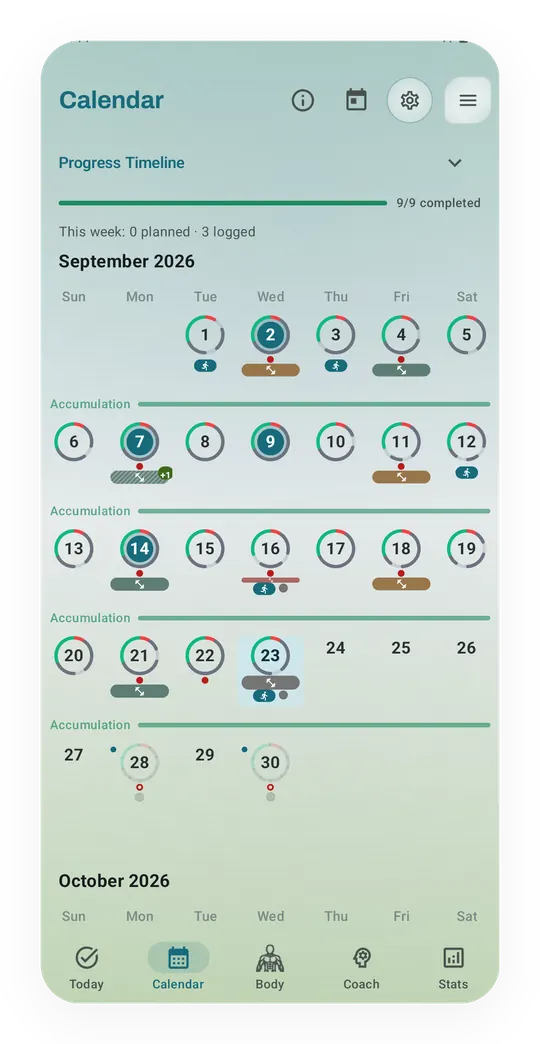
You like the week mapped out before Monday comes. The free calendar holds as many plans as you want, as far ahead as you want, and Pro adds repeating schedules and drag-to-move.
- FREETraining CalendarUnlimited planning
- PROTraining CalendarFaster week moves
- PRORest Day TrackerScheduled-ahead + auto-detection
- PROFatigue-Aware Swaps
Plans from a coach
Your plan may come from a coach's sheet or from a chat with an AI assistant. Kinoku can read a photo of the sheet, or a file the assistant writes, into routines on your phone, and one prompt gets ChatGPT, Claude or Gemini to write that file for you.
- FREEPhoto Import
- FREEBackup & Import
- FREEExercise LibraryLibrary and custom moves
Where it stopsA swim or a spin class has no pace or heart rate for the curve to score, so Kinoku falls back on how long it lasted and how hard it felt.
More on the Form curve, the training calendar and a free hybrid training plan.
Runners
At dawn the park is quiet, and each run becomes a line of pace, splits and distance in the same record as your lifts.

Everyday runners
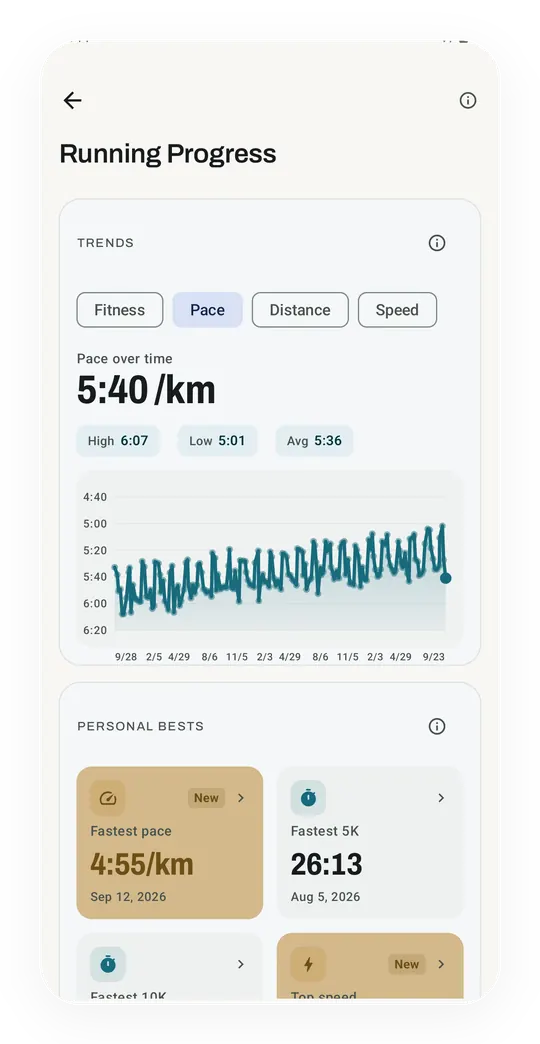
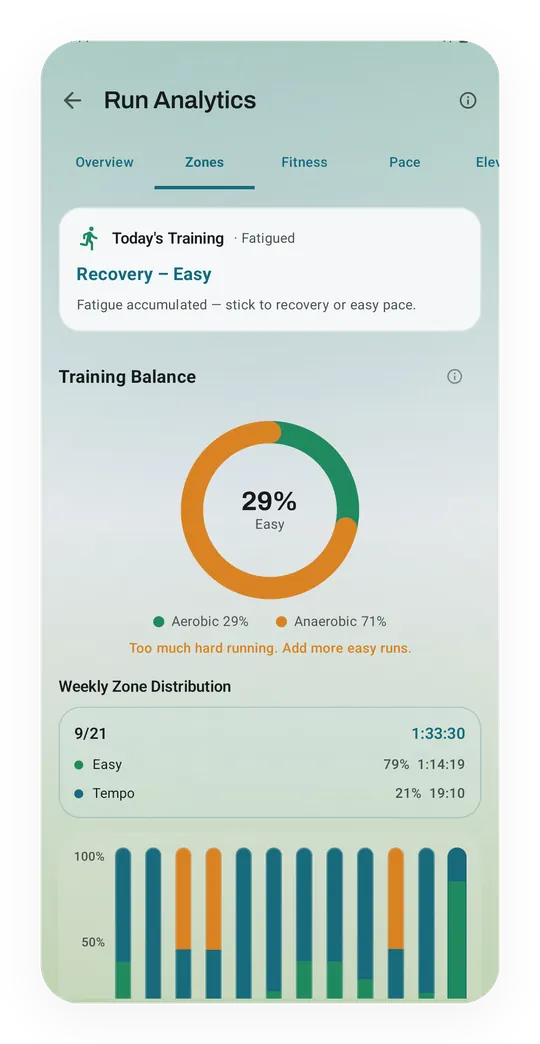
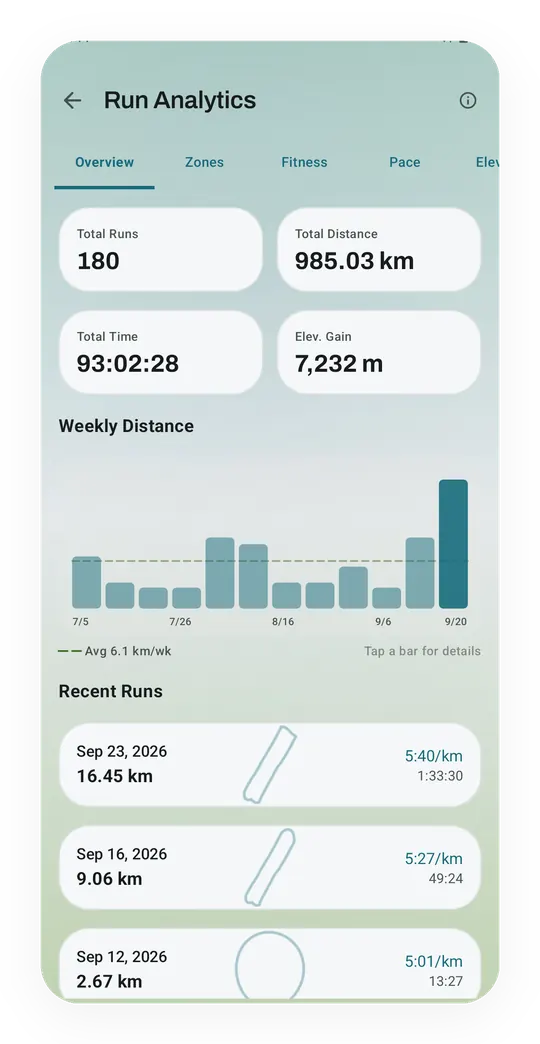
You want each run recorded well, with live pace, splits and voice cues. Kinoku also keeps your fastest 5K and 10K and the distance on each pair of shoes, all for free.
- FREEGPS Run Tracking
- FREERunning Progress
- FREEShoe Mileage Tracking
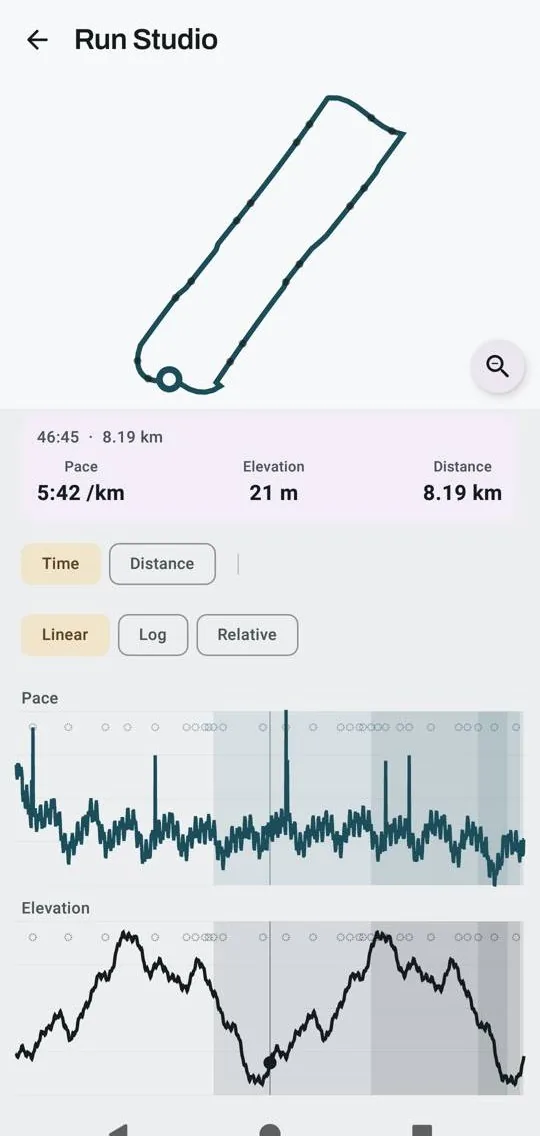
- FREERun StudioFull interactive screen
Runners chasing a race
You build your own interval workouts for free. Pro adds pace zones, race forecasts and a compare card that sets each run beside your similar past runs.
- FREEInterval Editor
- PROZone Training
- PRORun Analytics
- PRORun StudioReplay, ghost compare, notes
Watch wearers
The free Wear OS app tracks workouts, runs and steps from your wrist. Health Connect brings in your sleep, your resting heart rate and the runs that other apps saved.
- FREEWear OS
- FREEHealth ConnectStandard signals
- PROSmart TodayRecovery body and easy day
Runners leaving Strava
You want years of runs without the feed that came with them. Kinoku reads the Strava archive ZIP on your phone, with no login and no link to Strava's servers.
- FREEStrava Import
- PRORoute Heatmap
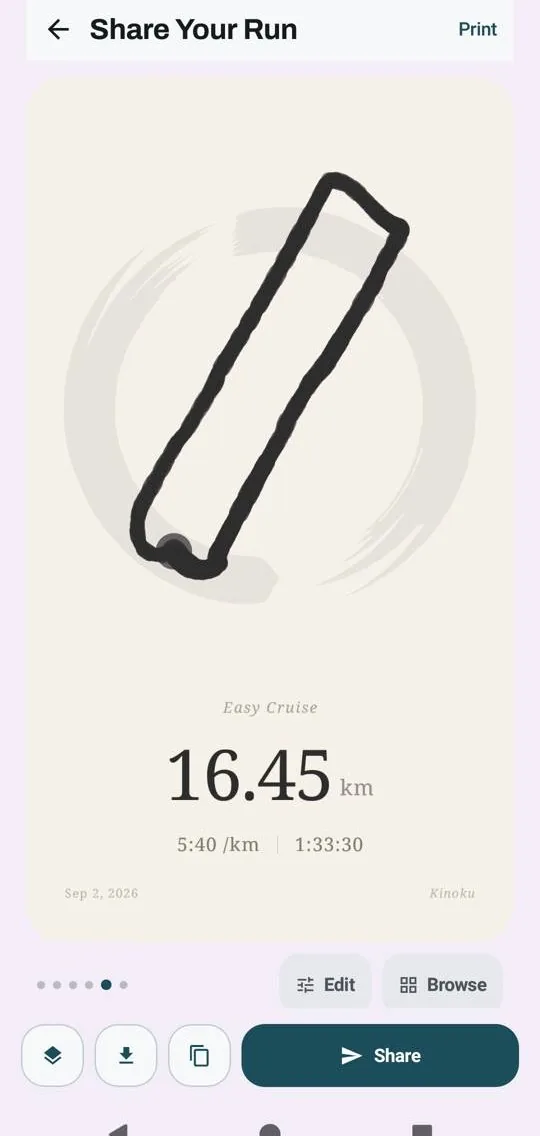
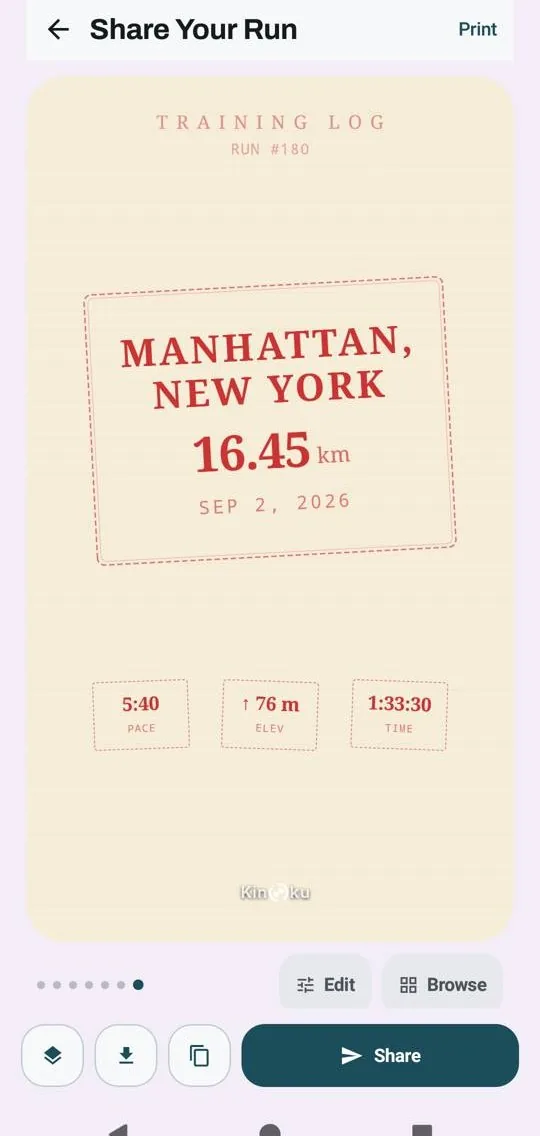
- FREEShare Cards
Where it stopsKinoku has no cycling mode and does not pair with a Bluetooth chest strap, so heart rate comes from its watch app or, after the run, from Health Connect.
More on GPS runs, Kinoku and Strava and the Wear OS app.

Walkers
From the day you start a road, the kilometres you walk or run move a small marker along it, whichever streets you took. Only the distance travels, so the map never draws your route.
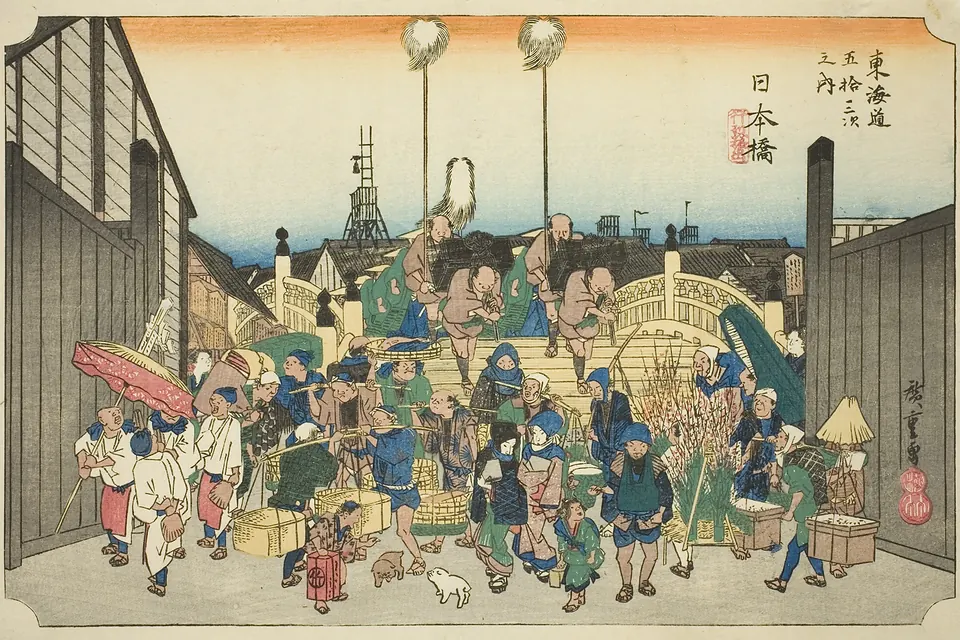
Behind this text is the Tōkaidō road as the app draws it, with sample progress: the marker has walked from Nihonbashi toward Hakone, whose print stays covered until it arrives.
Walkers who love maps
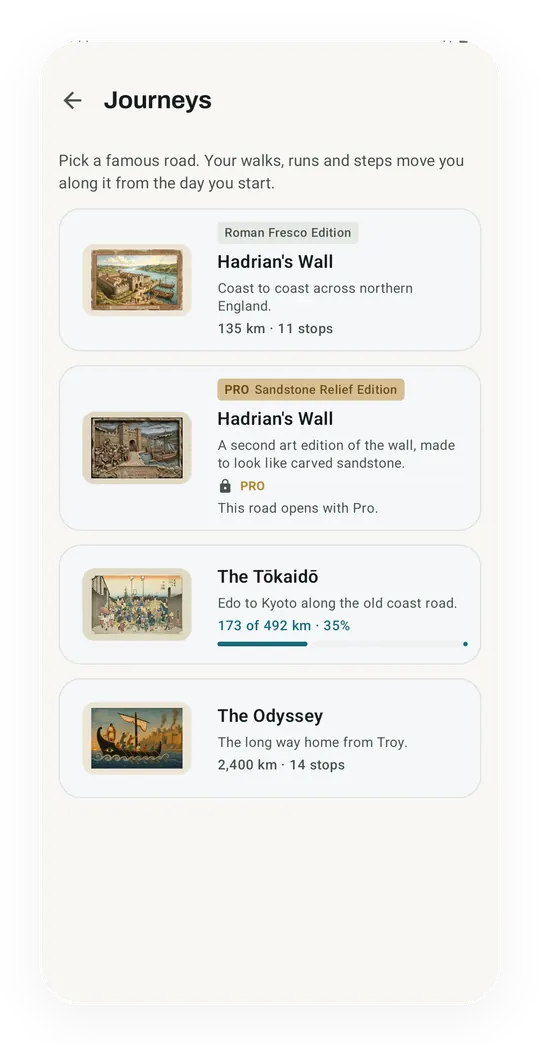
You may never log a workout, yet your everyday walks and steps carry you along Hadrian's Wall (135km), the Tōkaidō (492 km) or the Odyssey, whose 2,400 km is a distance chosen for the story. Most stops keep their print covered until you arrive, there is no deadline, and Pro adds a Sandstone Relief edition of Hadrian's Wall.
Runners who lift
Tracked runs and walks move the marker, and gym work can join if you switch it on. Every 2,000 kg you lift then counts as one kilometre, shown on its own line apart from the distance you covered on foot.
- FREEJourneysThree complete roads
- FREEGPS Run Tracking
- FREEWorkout LoggingCore logging
Where it stopsA road begins on the day you start it, so older walks stay in your history without moving the marker, and one road collects distance at a time.
More on Journeys, the Tōkaidō and walking Hadrian's Wall.
People who want no account
Your training history has no Kinoku server to go to. The network paths the app does use are all named in the privacy policy. They include Android backup to your Google account, Play billing, map tiles and a promo check that may run when the app starts. For video links you save, the app fetches titles and thumbnails from YouTube or Vimeo. Weather and diagnostics stay off until you turn them on.
Private by choice
There is no account to make, and no Kinoku server holds your training history. Android Auto Backup, manual backup, export, and each network exception are explained plainly.
Android system backup can copy eligible main data to your Google account. Dedicated cycle records and configuration are excluded from future automatic cloud backup; they move only through manual Kinoku ZIP backup or device transfer you start.
- FREEGPS Run Tracking
- FREEPhoto Import
- FREEHealth ConnectStandard signals
Keepers of long logs
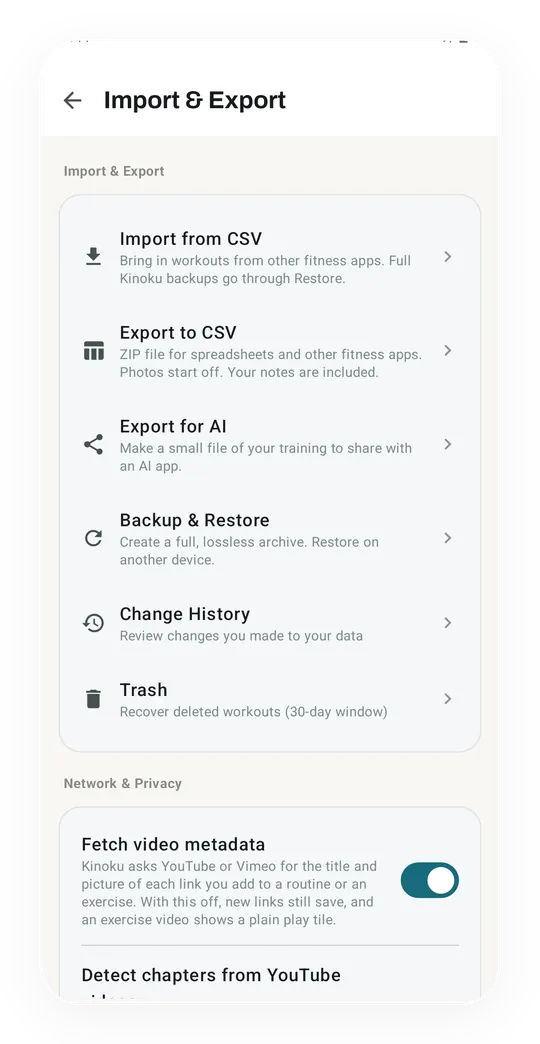
You have years of training in one log, and a backup of it is a lossless file you own. Kinoku shows each saved edit as a plain before-and-after and keeps deleted workouts for 30 days.
- FREEBackup & Import
- FREEChange History
- FREETrash & 30-day Undo
Cycle-aware trainers
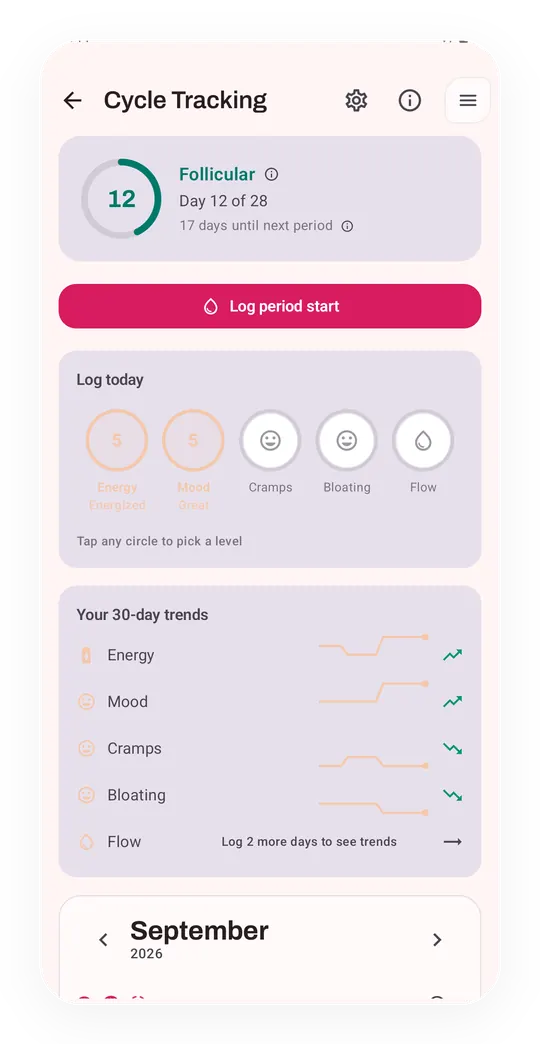
Cycle tracking, forecasts and a trying-to-conceive mode are free, and after 3 full cycles Pro can compare your training with each phase. Kinoku is a tracker rather than a medical tool.
The cycle database stays separate and is excluded from Android's automatic cloud-backup path.
- FREECycle Tracking & FertilityTracking, predictions & fertility
- PROCycle Tracking & FertilityHealth Connect + correlations
Where it stopsTwo phones do not sync with each other, because there is no Kinoku account or server to keep them in step.
More on data sovereignty, Change History and cycle tracking.
Numbers people
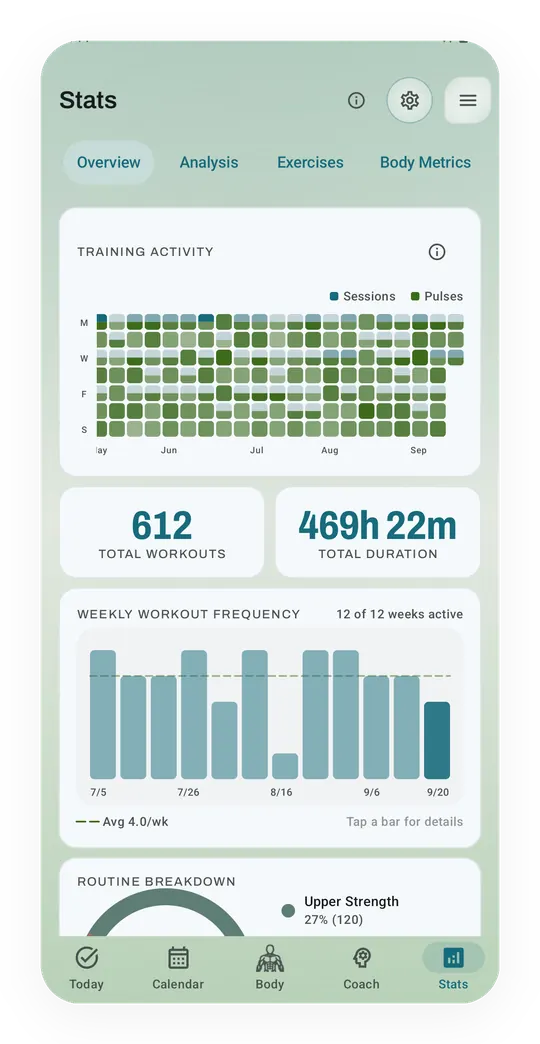
After dark, months of sets and runs turn into charts and data-art, and every one of them is drawn from your own training.

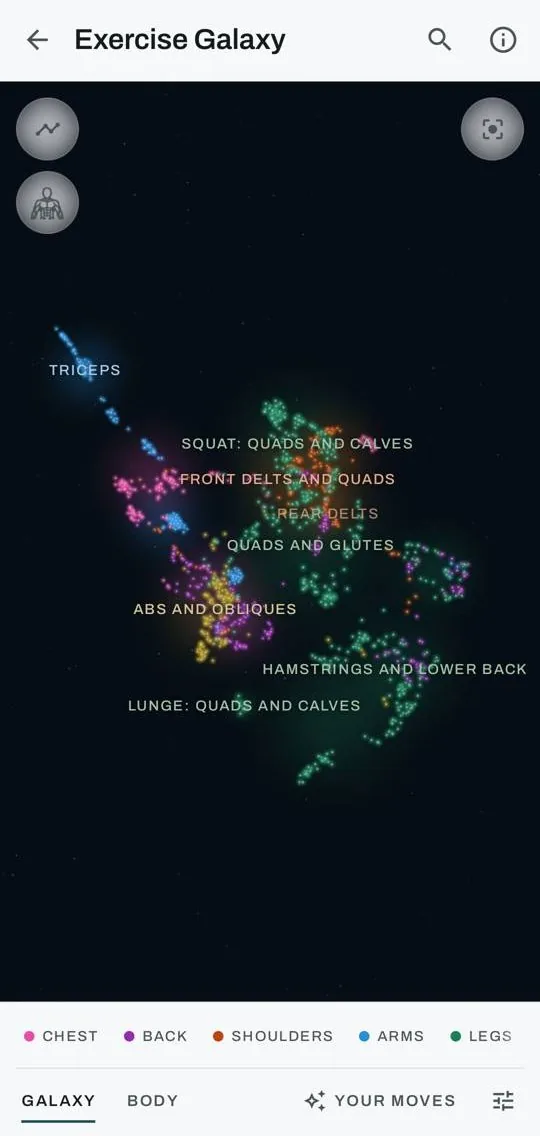
 Exercise GalaxyA free map in your browser turns all 1,321 exercises into stars, placed by the muscles each one works. It is in the app too, where it lights up the moves you train.Open the galaxy →
Numbers people
You like reading your own charts, and Pro Analytics adds strength scores, a 90-day Form Band and a check on how fast your training load is climbing. Until there is enough data, the free Kinoku Score shows a learning state instead of a made-up number.
- FREEStats & ProgressCore history and trends
- FREEKinoku ScoreBase Pulse
- PROPro Analytics
- PROForm Band
Progress sharers
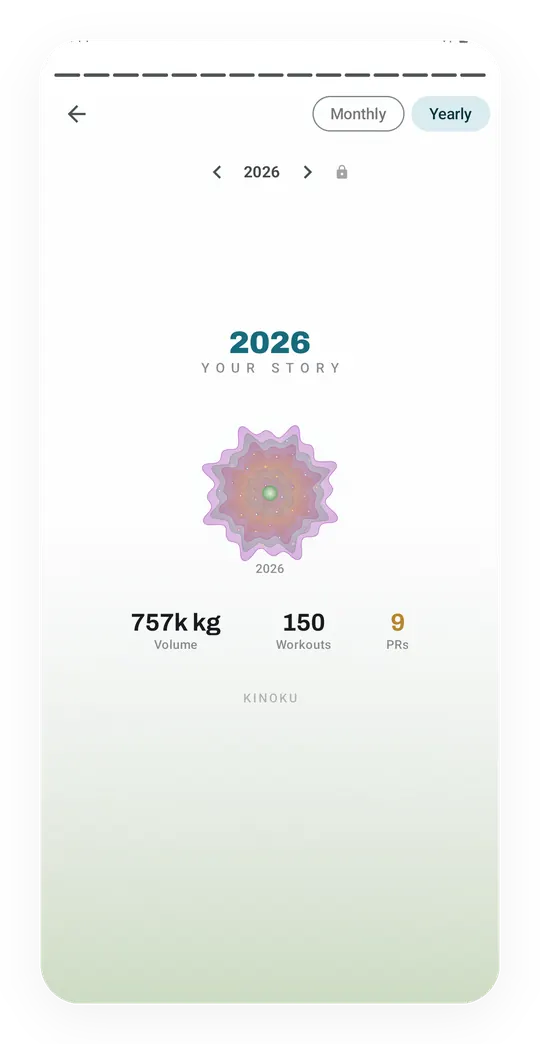
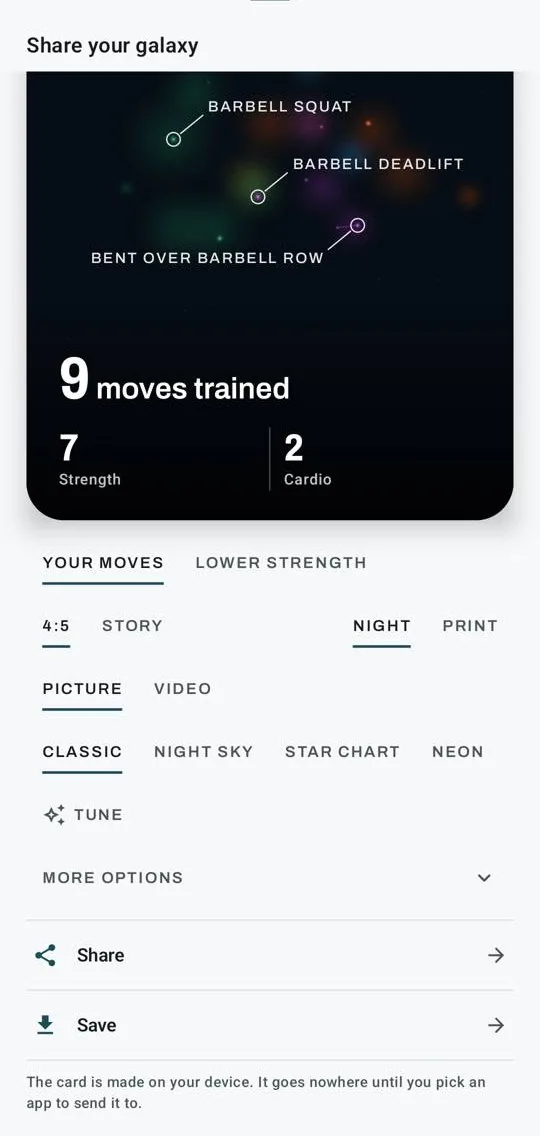
After a session Kinoku suggests up to 6 share looks that fit what you did, and 8 of its card styles turn your numbers into generative data-art on every plan.
- FREEShare Cards
- FREEYour StoryCurrent month + year
- PROYour StoryEarlier months + years
- FREEMuscle Impact (Post-Workout)
Design lovers and tinkerers
The free plan includes 20 of the 26 themes, and each theme sets the motion of the whole app as well as its colors. You can add your own exercises and daily metrics with no cap on either, and choose which screens sit in the bottom bar.
- FREEThemesCore theme library
- PROThemesExclusive finishes
- FREEExercise LibraryLibrary and custom moves
- FREEDaily Pulse Metrics
- FREEWidgets & ShortcutsFive home-screen widgets
Where it stopsSome of this depth is paid, including Pro Analytics and 6 of the themes, and the pricing page says which parts.
More on Pro Analytics, the themes, share cards and every way Kinoku shows your progress.
Everyone
First light comes round again, and every person on this page starts from the same free download.
People tired of paywalls
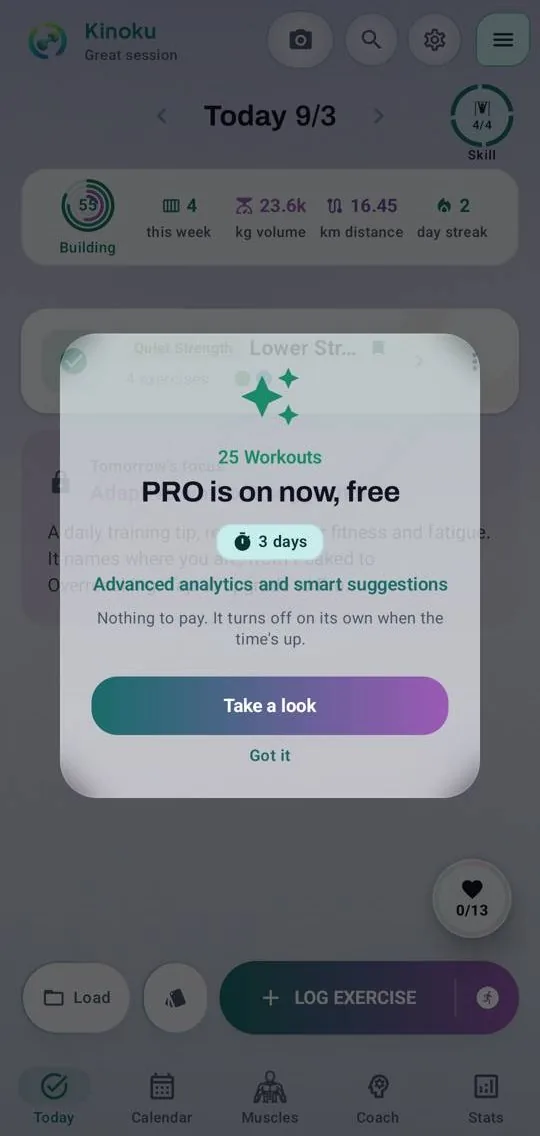
The free plan is a complete app, with zero ads and no caps on workouts, routines, history or runs. Training often can earn Pro time through Rewards with no payment asked, and Today may show one occasional Pro suggestion that you can dismiss.
- FREERewards
- FREERoutines & Programs
- FREEDaily Pulse Metrics
Lifters switching apps
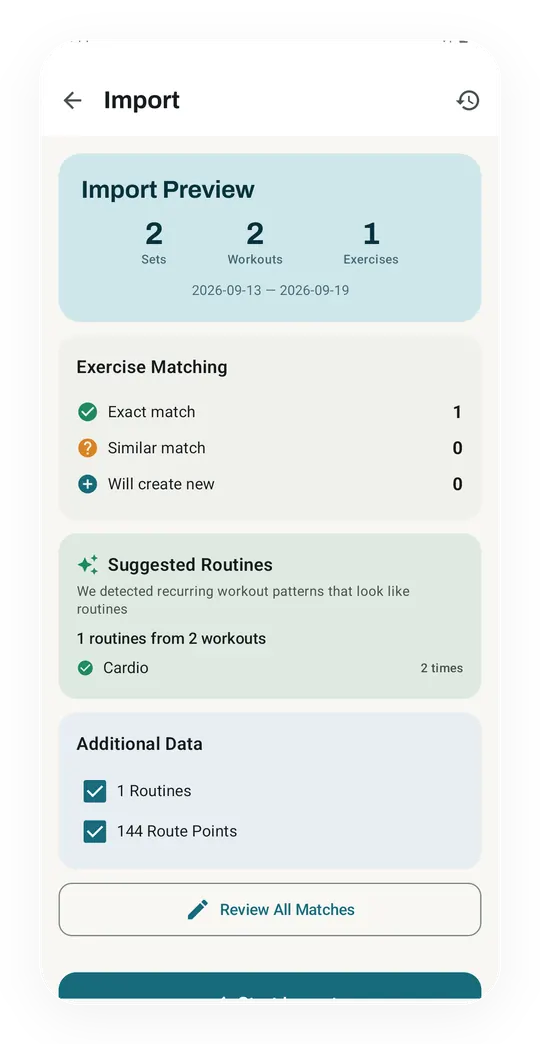
Your history can come with you from Hevy, FitNotes or a spreadsheet as a file. A review screen lets you fix exercise names before anything is saved.
- FREEBackup & Import
- FREEExercise LibraryLibrary and custom moves
- FREEChange History
Where it stopsKinoku is Android only, so it runs on Android phones and Wear OS watches, with no iPhone or web version.
An iPhone version is in the works.
More on the promise, moving from Hevy and the import format.
Whichever of these worlds sounds most like your week, Kinoku starts free, and Pro stays the one optional extra.
Each FREE or PRO label on this page comes from the same list as the features page.
The painted scenes on this page are AI-generated.