

Workout Logging
Every set, one tap. Log reps, RPE, RIR, set types, notes, and photos. The core of every session.
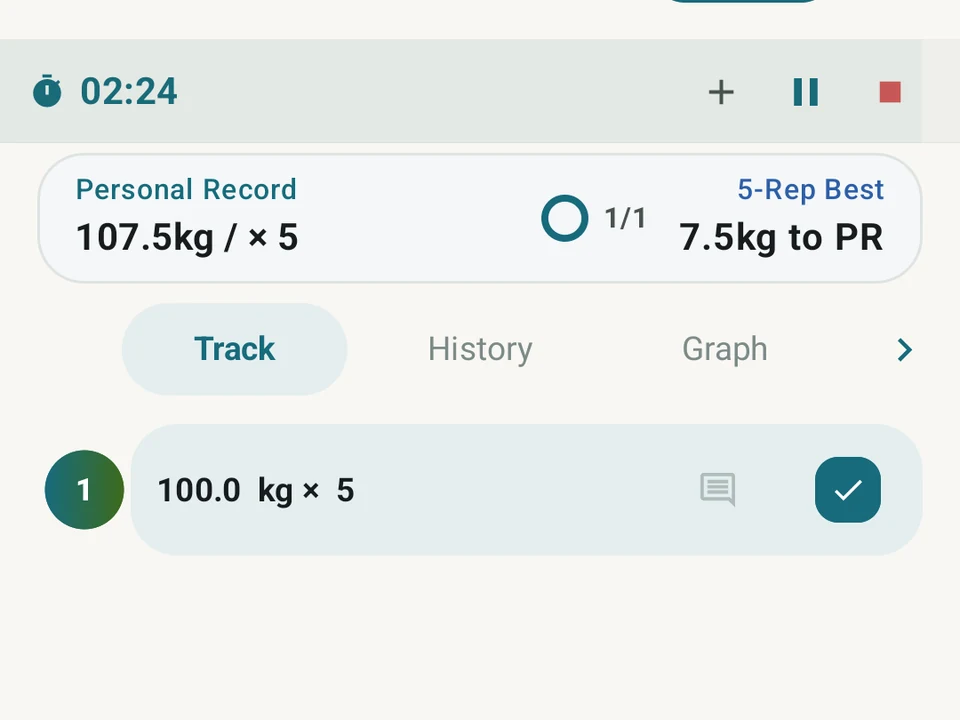
Real app capture
What this feature looks like with data
 Open full-size image ↗
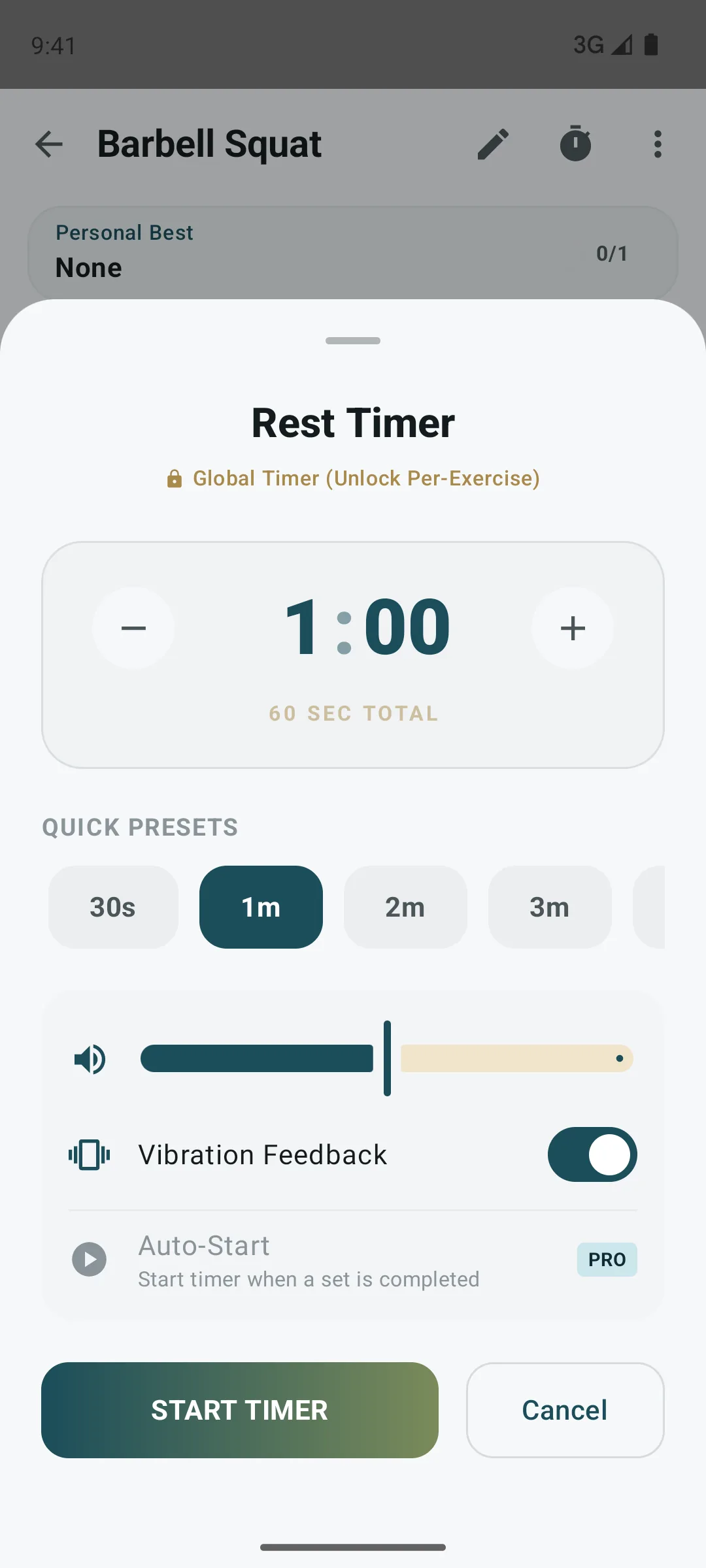
Rest timer sheet
Real capture. It auto-starts after a working set. Quick presets, a volume slider, and a buzz toggle.
 Open full-size image ↗
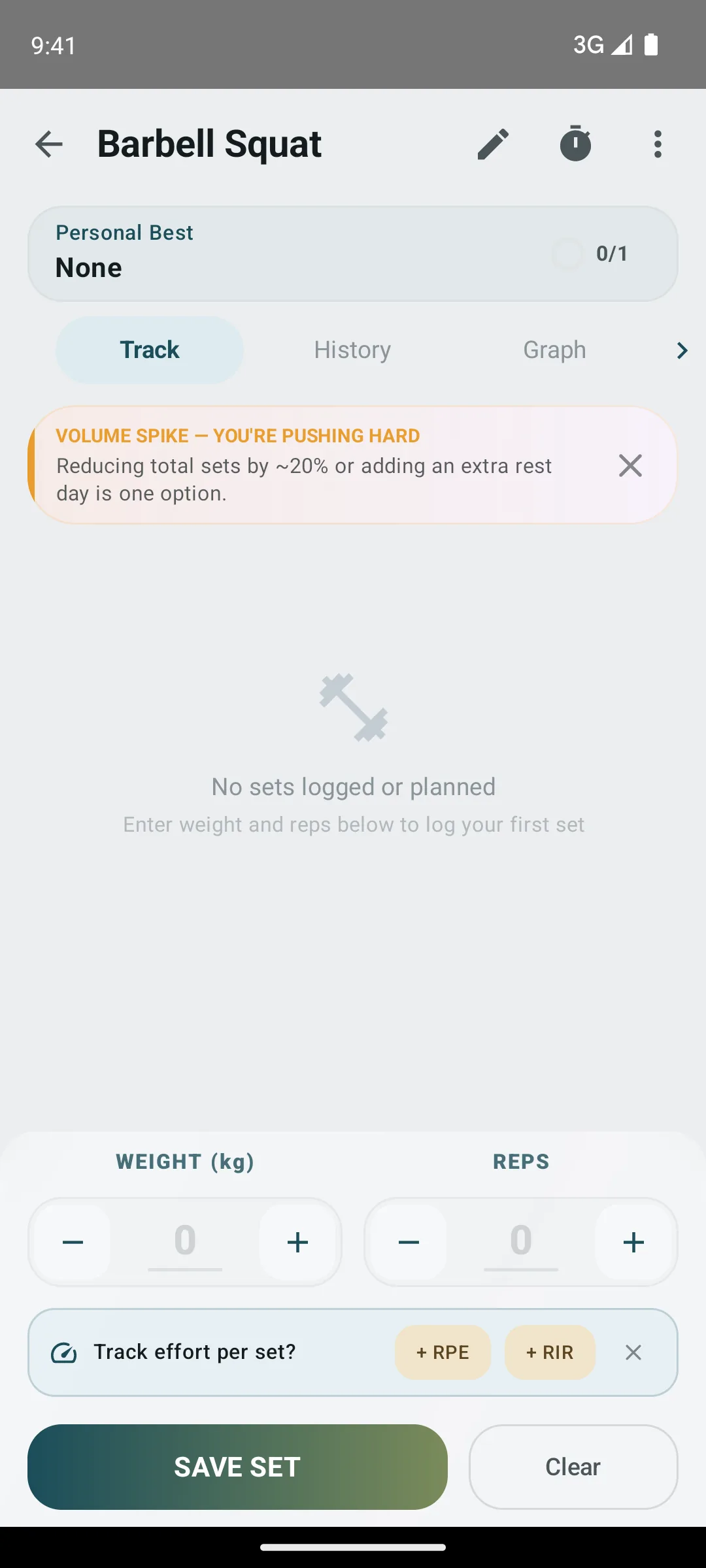
Active-exercise screen
Weight, reps, set type, RPE/RIR. The amber bar up top is the Coach. It spotted a jump in volume from recent sessions.
 Open full-size image ↗
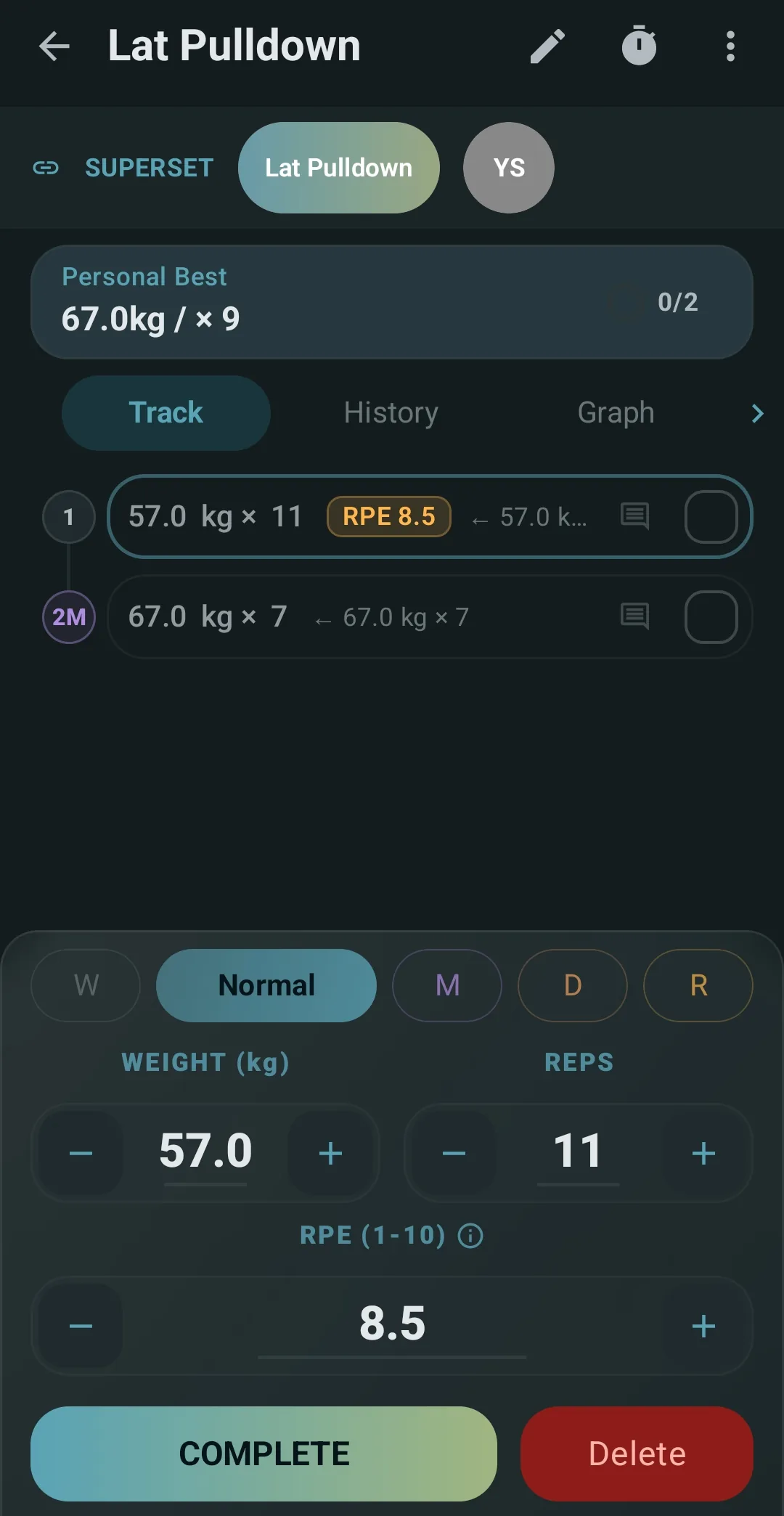
Set entry, mid-workout
Real capture. Set types, RPE, and your last numbers, right where you type.
 Open full-size image ↗
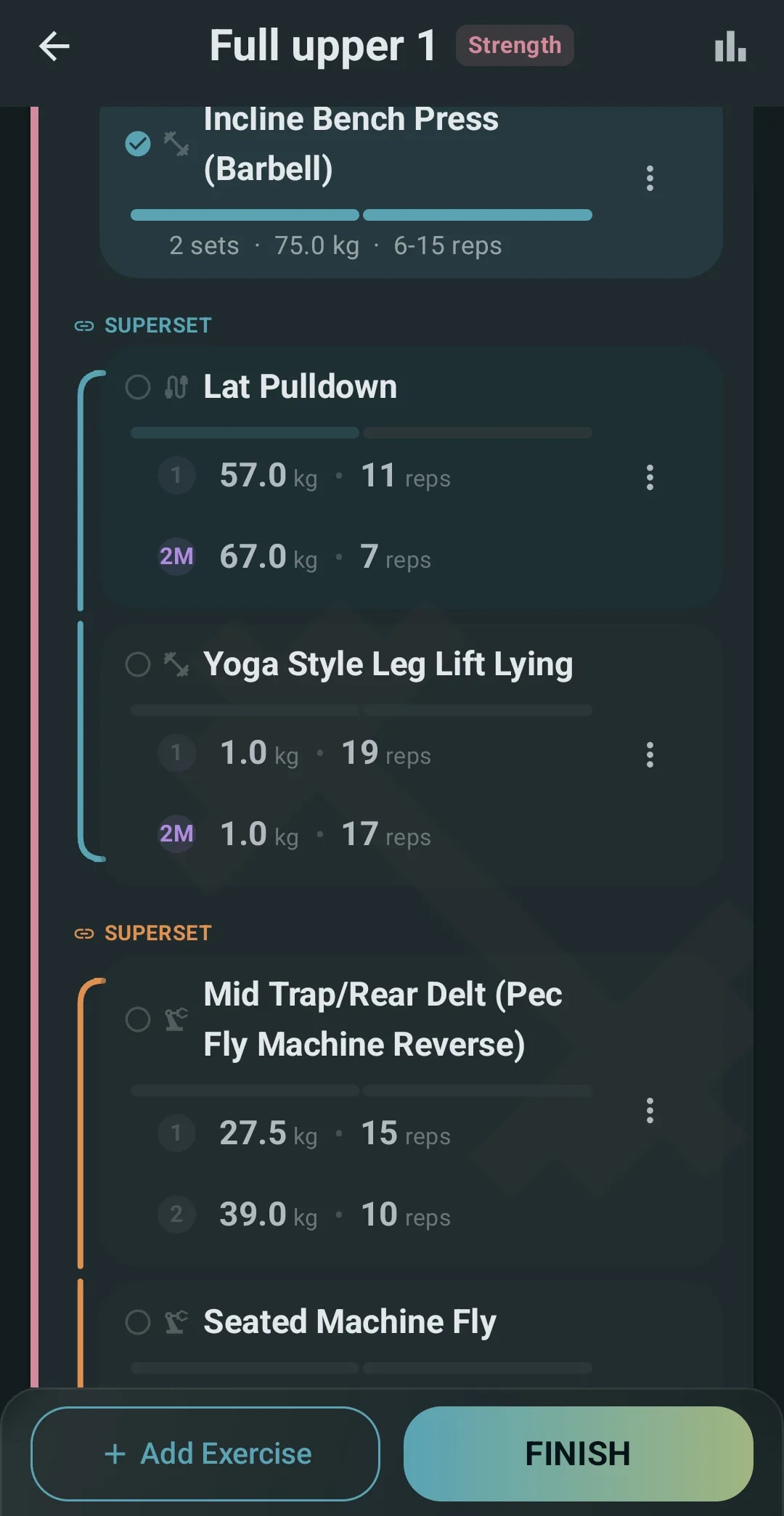
Supersets, color-coded
Real capture. Two supersets mid-workout, color-coded, with max effort sets marked.
Tier shape
How access changes by tier
Unlimited workouts and sets, the global rest timer, set types, RPE/RIR, notes, photos, and rest-pause countdowns.
Save a different rest-time preset for each exercise; the global default stays free.
What it is
Workout Logging is the part of Kinoku you use most, because you write down what you lifted here, and the app stays out of your way between sets so you can focus on the work. The reasons it earns that place are speed, the detail it can hold per set, and the fact that a dead phone does not lose your session.
What you can capture per set
- Weight and reps: the basics, with quick-tap values from your last set.
- RPE or RIR: rate of perceived exertion, meaning how hard the set felt (1 to 10), or reps in reserve, meaning how many reps you had left in the tank. Your choice. If you run a program that adjusts itself, the RPE vs RIR page says which one to pick.
- Set type: working, warmup, drop, failure, or rest-pause.
- Notes: anything you want to recall next time, like “felt heavy, slow it down.”
- Photos: form-check shots saved next to the set. Kinoku does not upload them to a Kinoku server; as eligible app files, Android system backup may copy them to your Google account.
What makes it fast
- Auto-fill copies your last set. Most of the time you only change what’s new.
- Rest timer starts on its own when you log a working set. Pro can save a rest time per exercise.
- Voice input for notes. Say “go heavier next time” and get back to your set.
- One-tap drop sets: log the working set, tap drop, log the next. They cluster as one entry.
- Crash-safe: if your phone dies mid-workout, your session comes back on the next launch. The timer too.
Rest-pause, run for you
Rest-pause is a way to get more reps out of one weight, where you push near failure, rest about 15 seconds, then go again. Kinoku runs that clock for you, so when you log a rest-pause set a 15-second countdown starts on its own, and when it hits zero the app adds the next mini-set, ready to log.
Take a set of pull-downs that stalls short of your target as the example. You mark it rest-pause, the 15-second clock runs while you shake out your arms, and the continuation set is waiting when the clock reaches zero, so you skip the timer math and keep moving. None of the big trackers we compared even has a rest-pause set type, and here it is free with the countdown running itself.
What’s tracked across the session
You see it all live: total volume, total reps, working set count, time, and rest time. There’s also a per-muscle breakdown, so you know if you’re hitting things evenly, and the pull-down set above lands in the back and biceps columns the moment you log it.
Free, forever
Logging is on the free tier, and there is no paid version of the part where you write down what you lifted. The global rest timer is free too. Pro can save a different rest-time preset for each exercise and adds deeper charts and analysis on top of your logged data.
Kinoku is Android only, so the log lives on that phone and moves by a backup file rather than a cloud sync. What is fixed is that the act of logging costs nothing, while the list of things you can capture per set is the current set rather than a final one.
Try it for yourself.
Available on Google Play. The core here is free. Pro adds optional extras.
Get on Google PlayRelated surfaces
Warmup sets built from your working weight, bar weight, and unit system.
Load the bar fast with a visual plate layout. The calculator and bar-weight setting are free; Pro adds custom plate inventory settings.
Timer-driven circuits, rounds, rest phases, and safe session handling.