

GPS Run Tracking
Real-time pace, splits, route map, and audio cues. Core tracking works offline; maps and opt-in weather can use network services.
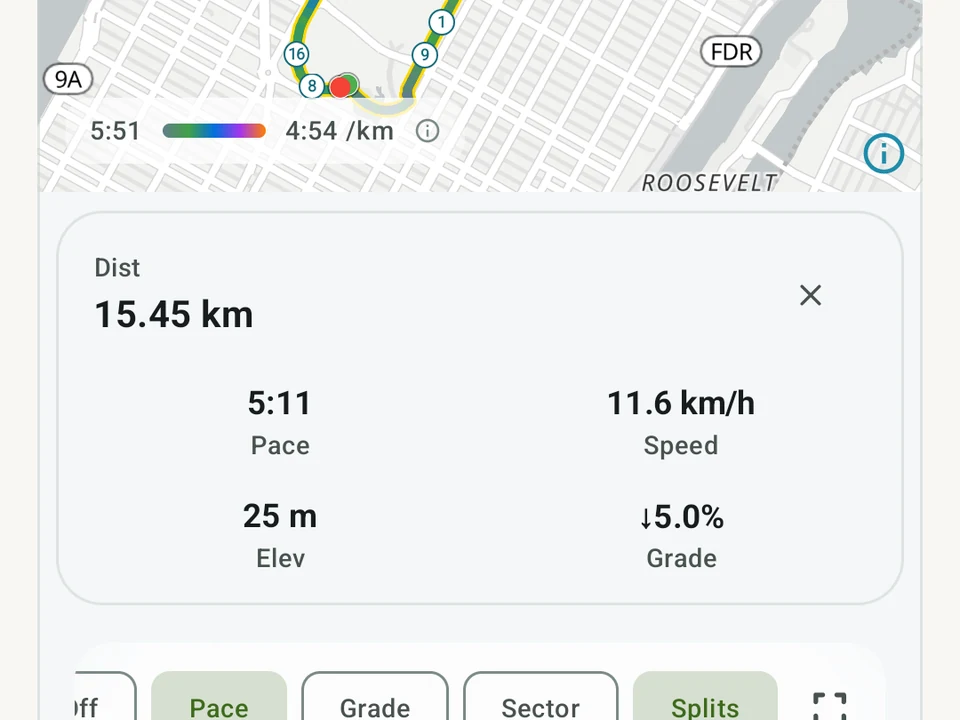
Real app capture
What this feature looks like with data
 Open full-size image ↗
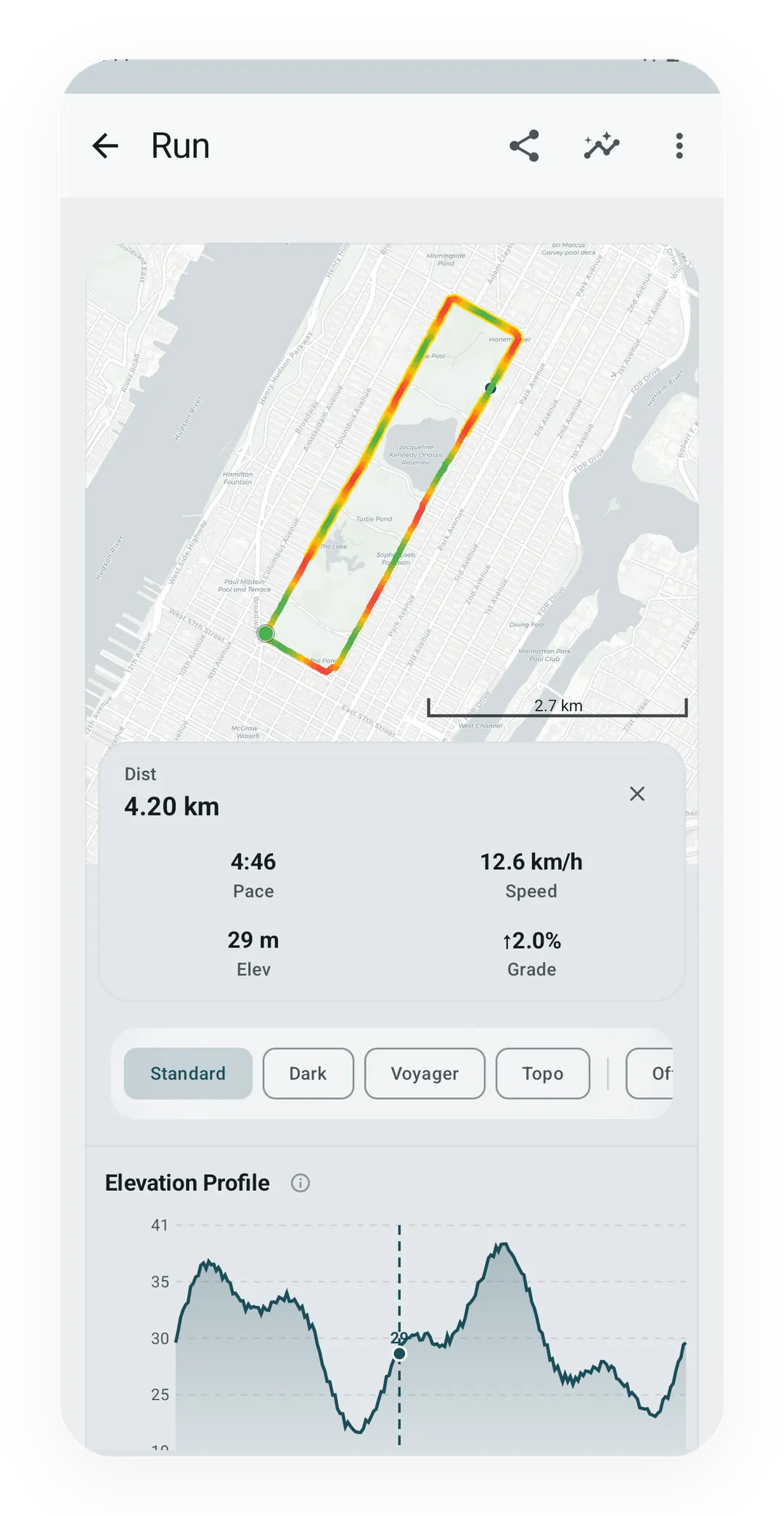
Your route, coloured by pace
Real capture, free tier. The whole run drawn on the map, running from slate at your slowest pace through green, blue and purple up to orange at your fastest, with the elevation underneath. The green dot marks the start and the red dot marks the finish. Tap anywhere on the line to see the pace and grade at that point.
 Open full-size image ↗
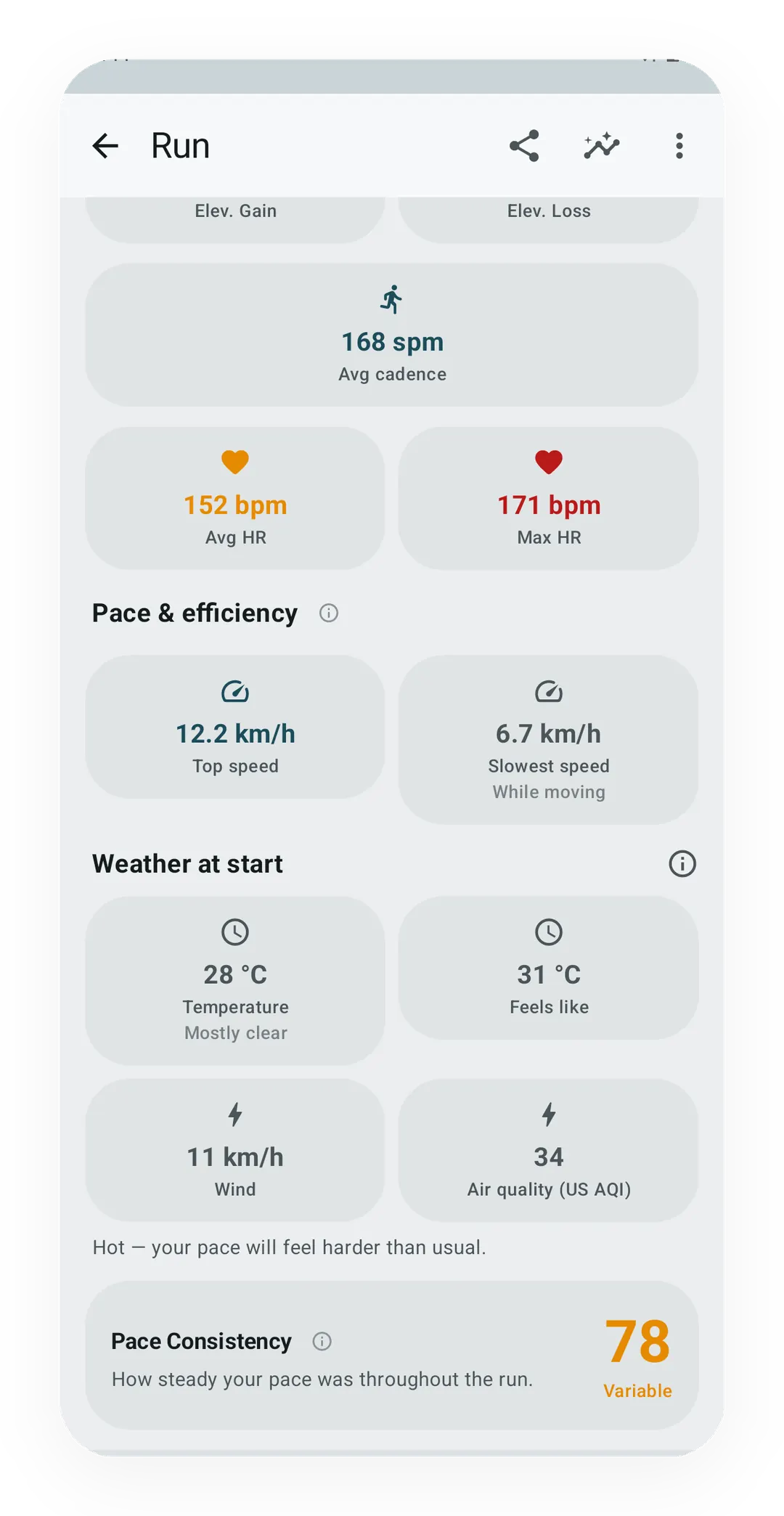
Weather saved with the run
Real capture, free tier. The run summary keeps the temperature, the feels-like, wind and air quality from when you set off, with a note on how the heat will feel. Kinoku records the day. It does not rewrite your pace.
What it is
GPS Run Tracking is a full run tracker built into Kinoku rather than a teaser for Pro. Tap start, go for your run, then tap stop, and your route, splits, pace, and heart rate all save to your phone. The example carried through this page is a run on a hot morning with the weather option switched on, since that is where the tracker’s privacy choices show most clearly.
What you get on every run
- Live pace and distance. Big, easy-to-read numbers that update as you run.
- Audio cues. Your headphones give you a quick voice note if your cadence drops, if you’ve been climbing a hill, or if it’s hot out. You can turn each one on or off in Settings.
- Weather context (opt-in). Add the temperature, wind, air quality, pollen, and UV (ultraviolet) level to each run. The data comes from Open-Meteo. Your spot on the map is rounded to about 1.1 km before each request, so your exact location stays private.
- Shoe mileage. Runs add up against your default pair of shoes, so you can see when it’s time for new ones.
- Wear OS. Start a run from your watch. Track heart rate and see your splits as you go.
What’s in the free run summary
After each run you get the route on a map, along with a splits table, your average pace, total distance, total time, and elevation gain. Kinoku does not upload that history to a Kinoku server; routes are eligible main-app data, so Android system backup may copy them to your Google account. You can look back at any past run, view its route, and share it as a card.
Free progress versus Pro run depth
Free includes Running Progress: best-effort records, a fitness estimate, and pace, fitness, distance, and speed trends. Pro adds the six-tab Run Analytics dashboard, race-time forecasts, pacing scores, weekly training load, and zone analysis, which is the one part of running in Kinoku that costs money.
Running in the heat
Back to that hot morning. Kinoku saves the conditions with the run, and the request that fetched them carried a location rounded to about 1.1 km rather than your doorstep. What it does not do is change your pace targets or rewrite your plan, because that call stays with you.
If you want a number before you head out, the heat and dew point pace calculator turns today’s temperature and dew point into a pace band. The full explainer covers why dew point beats humidity and what changes once your body gets used to hot weather.
The privacy story
Strava, Garmin Connect, and Nike Run Club center their own account-backed clouds, while Kinoku does not require a Kinoku account and does not upload your run history to a Kinoku server. Your run record lives in the app’s private storage, and eligible main-app data may enter Android system backup in your Google account. There are no friends to add, no public profile to fill in, and no leaderboard to climb.
Two edges are worth naming plainly. Map tiles and the opt-in weather request are the parts of a run that reach the network, and Kinoku runs on Android phones and Wear OS watches only. What stays fixed is that the run record itself has no Kinoku server to go to, while the list of network edges can change as the app grows, and we name each one when it does.
Try it for yourself.
Available on Google Play. Core access starts on the free tier.
Get on Google PlayRelated surfaces
Offline run breakdown with splits, a fitness score from your runs, a pacing score, best efforts, race forecasts, and a compare card that stacks each run against your similar past runs.
Pace zones, easy-versus-hard balance, and a training effect score built into your runs.
Your run records and whether you are getting faster, over time. It reads your best efforts and a fitness estimate, never plain average pace, and only claims progress when the trend is sure.