

Military Calisthenics Workout: The Army's Drills in Order
The US Army's own calisthenics drills from its fitness manual, with every move, count and order, whether women do different drills, and how to log them.
Kinoku in practice
Where this shows up in the app
 Open full-size image ↗
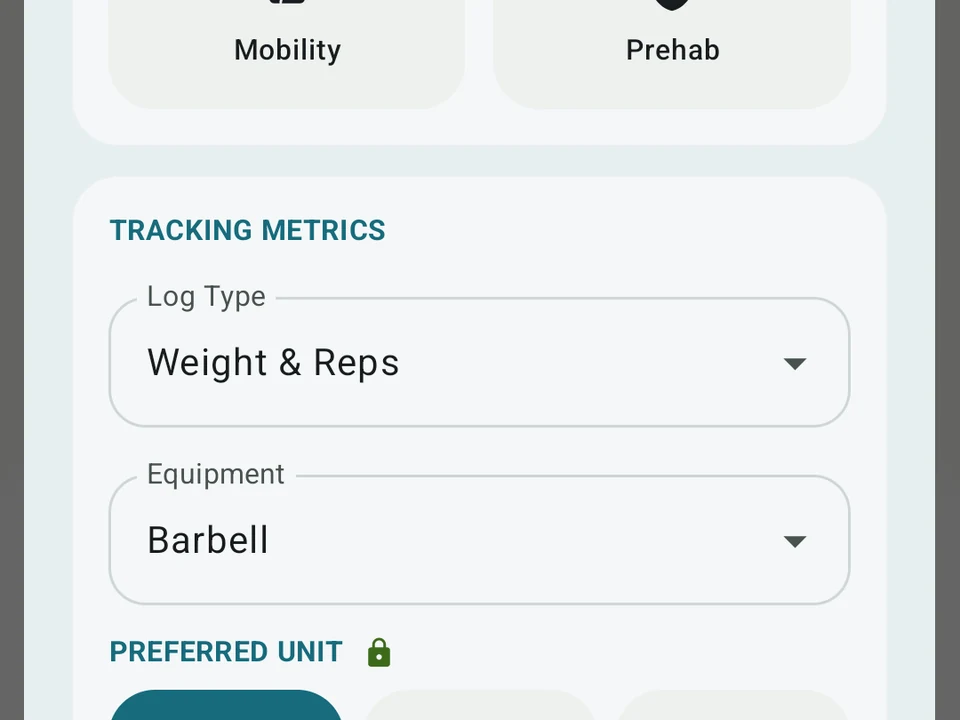
Where a custom move gets its log type
App capture. The exercise editor sets how a move is logged, here Weight & Reps. A counted drill move can use Reps Only, and a Recovery Drill hold can use Time Only.
 Open full-size image ↗
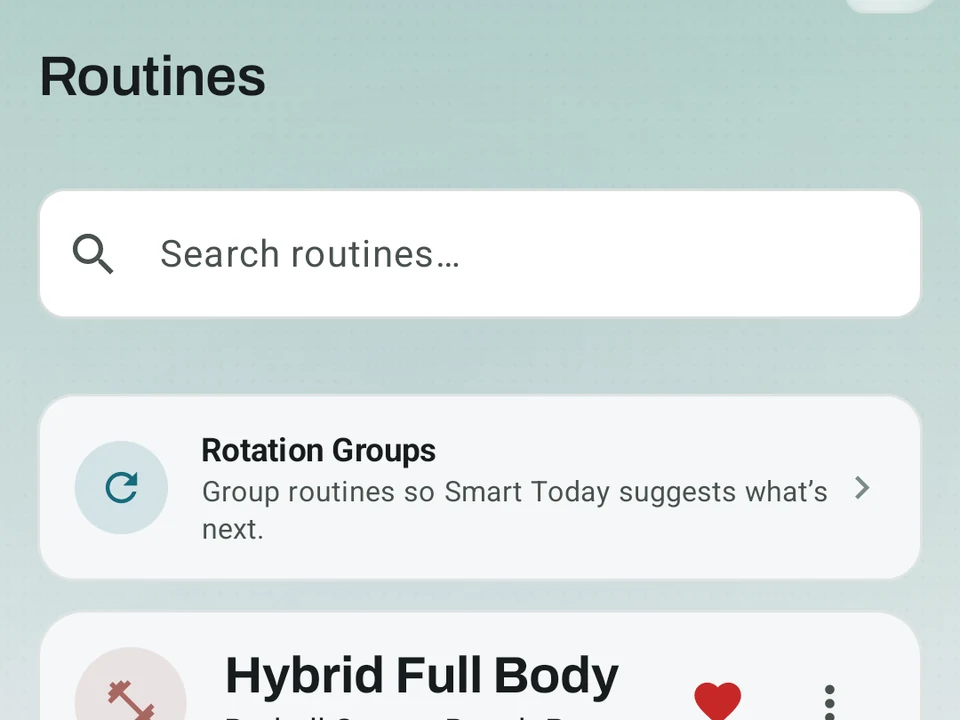
One routine per session
App capture. Each drill session can be its own routine, and a free Rotation Group can cycle the sessions in order.
Quickstart
In the US Army’s own manual, a workout starts with the Preparation Drill, has a Conditioning Drill as its main part, and ends with the Recovery Drill.
| Order | Drill | Moves | Each move |
|---|---|---|---|
| 1 | Preparation Drill | 10 | 10 reps |
| 2 | Conditioning Drill 1, 2 or 3 | 5, 5 or 10 | 5 to 10 reps |
| 3 | Recovery Drill | 8 | A hold of 20 to 30 seconds |
The manual is Army Techniques Publication (ATP) 7-22.02, Holistic Health and Fitness Drills and Exercises, dated October 2020 with its first change in September 2025. Every move, count and order on this page comes from that document.
Where the drills come from
ATP 7-22.02 is the Army’s book of set drills, written so that Soldiers train the same way wherever they are. The Army’s publishing site lists it as active, and the PDF is cleared for public release, so anyone can read it. The PDF’s contents page still carries a “signature draft” line, but its last page is signed and dated 16 September 2025.
The manual sets the order of a session in its first pages, where it says that “All physical activity concludes with recovery drills”. The main work sits between the warm-up and the cool-down, and the manual offers many kinds, from runs and foot marches to medicine ball drills. The Conditioning Drills are the part it calls calisthenics, in its words “Moderate to advanced calisthenics”.
A leader calls the counts out loud for a group, and the manual gives two speeds: “Cadence is either slow or moderate (50 or 80 counts per minute, respectively)”. Most moves take four counts for one rep. Take the Bend and Reach, the first move of the session, as an example. Ten reps at four counts each make 40 counts, so at the slow pace of 50 counts a minute the move takes 48 seconds.
The Preparation Drill: 10 moves to warm up
The Preparation Drill opens every session, and the manual says it is there to lower the chance of an injury in the harder training that follows. Its standard version, in Table 1-1 of the manual, gives each move 10 reps, though chapter 3 lists 5 to 10 for three of them.
| # | Exercise | Reps | Pace |
|---|---|---|---|
| 1 | Bend and Reach | 10 | Slow |
| 2 | Rear Lunge | 10 | Slow |
| 3 | High Jumper | 10 | Moderate |
| 4 | Rower | 10 | Slow |
| 5 | Squat Bender | 10 | Slow |
| 6 | Windmill | 10 | Slow |
| 7 | Forward Lunge | 10 | Slow |
| 8 | Prone Row | 10 | Slow |
| 9 | Bent-Leg Body Twist | 10 | Slow |
| 10 | Push-Up | 10 | Moderate |
The order above follows chapter 3, which numbers each move, while Table 1-1 swaps the Windmill and the Bent-Leg Body Twist. Between moves, Soldiers stand back up at attention. The manual says this “prevents overexertion” and teaches them to get up from the ground without their hands.
The Conditioning Drills: the calisthenics block
The Army has three Conditioning Drills, and each one is a fixed list of moves done in order. The manual sets one bar for Soldiers after basic training, which is ten reps of each move in the Preparation Drill and the Conditioning Drills.
Conditioning Drill 1
Conditioning Drill 1 has five moves, all at the moderate pace. The manual gives no count beside each move, so the 10 reps here come from the bar set above.
| # | Exercise | Reps | Pace |
|---|---|---|---|
| 1 | Power Jump | 10 | Moderate |
| 2 | V-Up | 10 | Moderate |
| 3 | Mountain Climber | 10 | Moderate |
| 4 | Leg-Tuck and Twist | 10 | Moderate |
| 5 | Single-Leg Push-Up | 10 | Moderate |
Conditioning Drill 2
Conditioning Drill 2 also has five moves, and the manual lists 5 to 10 reps for each of them.
| # | Exercise | Reps | Pace |
|---|---|---|---|
| 1 | Turn and Lunge | 5 to 10 | Slow |
| 2 | Supine Bicycle | 5 to 10 | Slow |
| 3 | Half Jack | 5 to 10 | Moderate |
| 4 | Swimmer | 5 to 10 | Slow |
| 5 | 8-Count T Push-Up | 5 to 10 | Moderate |
The Half Jack is a jumping jack with the arms raised only to shoulder height, and one rep of the 8-Count T Push-Up takes eight counts instead of four.
Conditioning Drill 3
Conditioning Drill 3 is the hardest of the three, and the manual calls it “an advanced plyometric drill”, meaning a drill of jumps and quick landings. Soldiers move on to it only once they have mastered the moves and can handle 10 reps of the first two drills.
| # | Exercise | Reps | Pace |
|---|---|---|---|
| 1 | Y Squat | Build up to 10 | Slow |
| 2 | Single-Leg Deadlift | Build up to 10 | Slow |
| 3 | Side-to-Side Knee Lifts | Build up to 10 | Moderate |
| 4 | Front Kick Alternate Toe Touch | Build up to 10 | Moderate |
| 5 | Tuck Jump | Build up to 10 | Slow |
| 6 | Straddle Run Forward and Backward | 5 to 10 | Moderate |
| 7 | Half-Squat Laterals | 5 to 10 | Moderate |
| 8 | Frog Jumps Forward and Backward | 5 to 10 | Moderate |
| 9 | Alternate ¼-Turn Jump | Not stated | Moderate |
| 10 | Alternate Staggered Squat Jump | 10 | Slow |
The Alternate ¼-Turn Jump turns the legs 90 degrees to each side while the chest keeps facing forward. The manual gives it no count, while the last move, the Alternate Staggered Squat Jump, gets ten reps to close the drill.
The Recovery Drill: 8 stretches to cool down
The Recovery Drill ends the session, and in the manual’s words it “gradually and safely tapers off activities”. Each stretch is held for 20 to 30 seconds instead of counted.
| # | Exercise | Hold |
|---|---|---|
| 1 | Overhead Arm Pull | 20 to 30 seconds a side |
| 2 | Rear Lunge | 20 to 30 seconds a side |
| 3 | Extend and Flex | 20 to 30 seconds in each of two positions |
| 4 | Thigh Stretch | 20 to 30 seconds a side |
| 5 | Single-Leg Over | 20 to 30 seconds a side |
| 6 | Groin Stretch | 20 to 30 seconds a side |
| 7 | Calf Stretch | 20 to 30 seconds a side |
| 8 | Hamstring Stretch | 20 to 30 seconds, done twice |
The Rear Lunge shows up twice in a session, as a counted move in the warm-up and as a held stretch here. The Hamstring Stretch is done sitting, with the second hold reaching a little further than the first.
Is there a military calisthenics workout for women?
The Army’s manual gives one version of each drill to every Soldier. We searched its text and found no move, count or pace that changes for women.
The one chapter written for women is chapter 12, on training through pregnancy and after birth. In the manual’s words, it “includes specific exercises designed to assist female Soldiers during pregnancy and in recovery following childbirth”. Its six moves are the Reverse Sit-Up, the Oblique Sit-Up, the Modified Sit-Up, the Standing Trunk Curve, the Deep Sumo Squat and the Pelvic Clock.
The manual also has easier versions of the Preparation Drill, Conditioning Drill 1 and the Recovery Drill, for Soldiers with a limit such as an injury. Those easier versions do not change for women either. Scoring for the Army’s fitness test lives in a separate manual, ATP 7-22.01 Holistic Health and Fitness Testing, which this page does not cover.
A weekly plan built from the drills
The manual does not set a week of calisthenics alone, because its drills sit inside a full Army training plan. Its list for a typical week includes “Daily sessions of 90-120 minutes”, along with foot marches and free weights. So calisthenics are only one part of a Soldier’s week.
The week below is our own suggestion and not a plan from the manual. Each session opens with the Preparation Drill and closes with the Recovery Drill, with a rest day between sessions.
| Day | Main block |
|---|---|
| Monday | Conditioning Drill 1 |
| Wednesday | Conditioning Drill 2 |
| Friday | Conditioning Drill 1 |
| The next Monday | Conditioning Drill 2 |
Conditioning Drill 3 joins the rotation once 10 reps of the first two feel steady, which matches the manual’s own rule for starting it. Anyone new to training can begin with fewer reps and the easier versions, and the manual allows fewer reps and fewer moves in the warm-up too. If you are pregnant, injured or have a health condition, a talk with a doctor first is the safer choice.
How to set the drills up in Kinoku
Kinoku logs each drill move as a set, so a session becomes a routine you build once and start again each time. Routines and custom exercises are free and unlimited, and Kinoku runs on Android with no account.
A few of the Army’s moves already sit in Kinoku’s catalog of over 1,300 exercises, under these names.
| Army move | Closest exercise in Kinoku |
|---|---|
| Push-Up | Pushups |
| V-Up | V-Ups |
| Mountain Climber | Mountain Climbers, which logs time instead of reps |
| Forward Lunge | Lunges (Bodyweight) |
| Single-Leg Deadlift | Single-Leg Romanian Deadlift |
| Tuck Jump | Knee Tuck Jump |
| Supine Bicycle | Bicycle Crunches |
| Alternate Staggered Squat Jump | Jump Lunge, without the touch to the ground |
| Overhead Arm Pull | Standing Lateral Stretch |
| Thigh Stretch | On Your Side Quad Stretch |
| Single-Leg Over | Knee Across The Body |
| Extend and Flex | Upward Facing Dog, then Downward Dog |
| Calf Stretch | Standing Soleus And Achilles Stretch |
Two of Kinoku’s names can mislead here. Its Windmills and its Hamstring Stretch are both done lying on your back, while the Army’s Windmill is a standing twist and its Hamstring Stretch is done sitting. Every move missing from the table, such as the Bend and Reach, goes in as a custom exercise, and the setup takes five steps.
- In the menu, tap Routines, then Create Routine and Start Fresh.
- Name the routine for one session, such as “Army drills: Conditioning 1”, and tap Create Routine. In the new routine, tap Add Exercise.
- Search the Select Exercise list for each move in the table above and add it.
- For any other move, tap the + at the top of that list and give the new exercise the Army’s name. Set its Log Type to Reps Only for a counted move, or Time Only for a stretch.
- Give each counted move one set of 10 reps, and each stretch two timed sets, one for each side.
The Bend and Reach, for example, becomes a custom exercise set to Reps Only, with one set of 10. A set with a time on it shows a Stopwatch and a Timer, so a 30-second hold can count down on the phone while you stretch.
Two or three of these routines, one for each Conditioning Drill, can sit in a free Rotation Group, which suggests the one that is due next. You can plan any session on the calendar for free, and a schedule that repeats on its own is part of Kinoku Pro.
What Kinoku does not do for these drills
Kinoku is a log, so a few parts of the Army’s method stay with you.
- It does not call the counts. Its rep tempo is a written hint on the set, so keeping 50 or 80 counts a minute is up to you.
- Most of the Army’s moves are not in the catalog. All five drills hold 38 moves, and 25 of them need a custom exercise the first time.
- It does not score the Army’s fitness test or say how you would rank on it.
- It runs on Android only.
The calisthenics workout tracker apps page sets Kinoku beside other apps built for bodyweight training, with each claim quoted from the app’s own listing. For a bodyweight program that adds harder versions of each move over time, the Recommended Routine page covers the r/bodyweightfitness community’s free plan.
Common questions
What is the military calisthenics workout?
In the US Army's manual of drills, a workout starts with the Preparation Drill, has a Conditioning Drill as its main part, and ends with the Recovery Drill. The Preparation Drill warms you up with 10 moves, and the Recovery Drill cools you down with 8 held stretches. The manual is Army Techniques Publication 7-22.02, Holistic Health and Fitness Drills and Exercises.
Is there a military calisthenics workout for women?
The Army's manual gives one version of each drill for every Soldier, and we found no move, count or pace in it that changes by sex. The one chapter written for women covers pregnancy and the months after birth, with six moves such as the Pelvic Clock and the Deep Sumo Squat.
How many reps are in each Army drill?
The standard Preparation Drill gives each of its 10 moves 10 reps. The manual's standard for the Conditioning Drills is also 10 reps, with 5 to 10 listed for each move in Conditioning Drill 2. The Recovery Drill holds each stretch for 20 to 30 seconds, on each side where the move has two.
How often can I do the military calisthenics workout?
The manual does not set a calisthenics-only week, because its drills sit inside a full Army training plan. One way to use them, our own suggestion, is three sessions a week with a rest day between, taking turns between Conditioning Drills 1 and 2 until 10 reps of both feel controlled.
Can I track the Army drills in Kinoku?
Yes, as routines you build once and start each session. A few moves are in Kinoku's catalog, such as Pushups and V-Ups, and the rest go in as custom exercises set to count reps or time a hold. Routines and custom exercises are free and unlimited, on Android, with no account.
Track this in the app
Routines & Programs
Unlimited routines, Smart Sync, Starter Packs, and follow-along links are free, and so are Rotation Groups that cycle through several routines for you.
Core tracking works offline, with no mandatory account.
Related features
Unlimited routines, Smart Sync, Starter Packs, and follow-along links are free, and so are Rotation Groups that cycle through several routines for you.
1,300+ built-in exercises with muscle data and unlimited custom moves are free. Pro adds custom form photos and assisted sorting.
Every set, one tap. Track how hard each set felt, your rest timers, set types, and notes.
Set how fast to move each rep of an exercise. Kinoku shows the tempo as a light hint on every set.
Plan workouts on one calendar, with no limit on how many plans you keep or how far ahead you plan. Pro adds repeating schedules (weekly, custom days, or every few weeks), drag-to-move, bring-to-today, repeat-day, and day copy.