

Best gamified fitness apps for Android (2026)
Seven gamified fitness apps for Android, grouped by what the game rewards: your workouts, the distance you cover, or any habit. Each fact is quoted.
Kinoku in motion
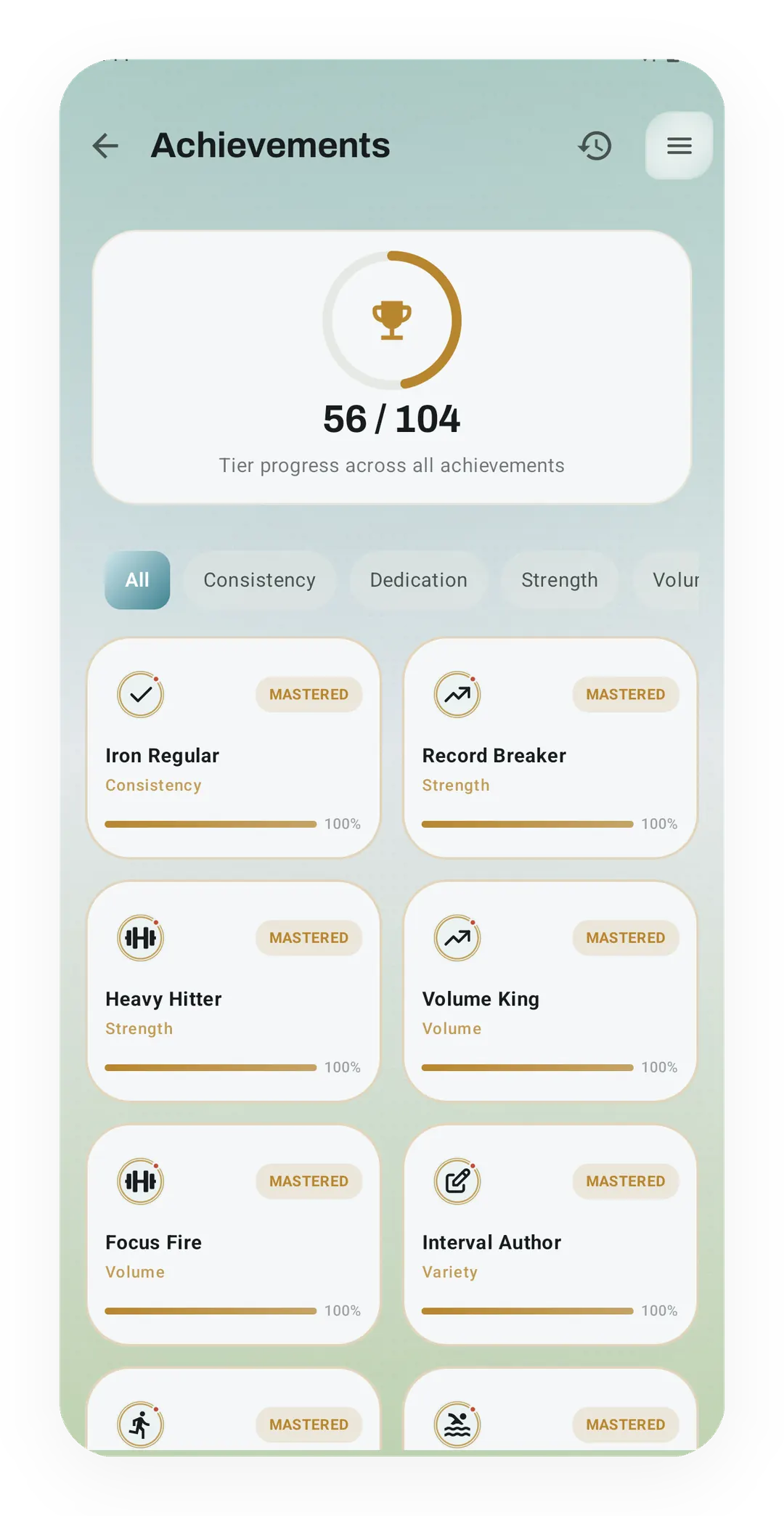
Journeys. Your everyday distance walks the Tōkaidō, one Hiroshige print per stop. Achievements. The badge wall filters by group, and a badge opens to show its tiers. Challenges. Goal rings fill as you train, and the Skill Board maps bodyweight skills. Your Story. Your month or year as a deck of cards you tap through.
Screen recordings from Kinoku on Android, with the pauses cut.
The pick depends on what you want rewarded: your workouts (FitCraft, Kinoku, Workout Quest), the distance you cover (Pokémon GO, Strava, Zombies, Run!) or any habit (Habitica).
At a glance
| App | Best for | Better at | Main trade-off |
|---|---|---|---|
| FitCraft | People who want an AI coach to plan sessions, with quests and cards | An AI coach builds the plan, and quests and cards reward finishing it | Its core features need an internet connection, in its own words |
| Habitica | Turning any habit, fitness included, into a role-playing game | Works for any habit, and parties of friends fight shared foes | You tick off each task yourself, and its listing describes no set or run log |
| Kinoku | Lifters and runners who want badges, challenges and map journeys with no account | 132 badges, 41 challenge templates and three illustrated roads, logged offline with no account | Android only for now, with no avatar, no story and no friends feed |
| Pokémon GO | Walkers who want a reason to explore outside | Eggs that hatch as you walk, weekly milestones and raids with other players | Asks for a network connection, and Adventure Sync wants location access at all times |
| Strava | Runners and riders who want monthly challenges, badges and a feed | Monthly challenges with digital badges, segment leaderboards and a feed of friends | An account is required, and some features need a subscription |
| Workout Quest | Gym lifters who want XP and quests for every set | XP for every set, muscle levels, quests and a friends leaderboard | AI workout plans are premium, and your workouts sit on its servers |
| Zombies, Run! | Runners and walkers who want a story to run through | An audio story that turns each run or walk into a mission | A subscription opens every mission, and it tracks runs and walks only |
Publisher disclosure
Kinoku, made by Dreamsoft Works, writes and publishes this page, and Kinoku is one of the apps on it. Every fact about another app is quoted from a page that app publishes, opened on October 4, 2026. We give no score. The apps are grouped by what their own pages say, and every label points at a quoted sentence.
Quickstart
Seven gamified fitness apps run on Android, and what separates them is what the game rewards. FitCraft, Kinoku and Workout Quest reward the workouts you do, while Pokémon GO (a location game where you catch creatures), Strava and Zombies, Run! reward distance, and Habitica rewards any habit you tick off. The apps are grouped that way, alphabetical inside each group, with no score and no winner.
What makes a fitness app gamified
A gamified fitness app wraps your training in game parts such as points, levels, quests, badges, a story or things to collect. The game sits on top of something the app tracks, so the first question is what counts toward it.
Four kinds of game show up on this page.
- Points and levels. XP (experience points) piles up as you train and raises a level, as in Workout Quest, FitCraft and Habitica. Workout Quest says “Every set earns XP for your hero and levels up the muscles you trained.”
- A story. Zombies, Run! plays an audio story through your headphones while you move, and its Play listing says “Every run becomes a mission.”
- Collecting. Pokémon GO hatches eggs as you walk, FitCraft hands out Exercise Cards, and Habitica has gear and pets to collect.
- Badges and challenges. Strava runs monthly challenges with digital badges, and Kinoku has 132 achievements and 41 challenge templates.
The game only knows what the app records. Habitica learns about a workout only when you tick the task off yourself, while Pokémon GO, Strava and the zombie game count the distance you cover.
Side by side
We filled each cell from a sentence on the app’s own pages, and “Not stated” marks a fact that no page we could open covers. Kinoku’s row comes from its own feature pages.
| App | What the game rewards | Game parts | Offline | Account | Paid parts |
|---|---|---|---|---|---|
| FitCraft | Finished sessions in an AI coach’s plan | Streaks, quests, Exercise Cards, avatar levels | Core features need internet, per its own blog | Accounts exist; not stated as required | Subscription plans after a free assessment |
| Kinoku | Logged workouts, runs, walks and steps | 132 achievements, 41 challenge templates, three map Journeys, seven Skill Journeys | Yes, with no account | No account | Pro adds 24 achievements, the Achievement Timeline, 6 challenge templates, challenge insights and one Journey edition |
| Workout Quest | Every logged set | XP, muscle levels, quests, collectible cards, a friends leaderboard | Logs offline and syncs later | Accounts exist; workouts sit on its servers | AI workout plans are premium |
| Pokémon GO | Distance walked | Catching, egg hatching, raids, weekly milestones | Recommends a network connection | Needed for “certain Services” | Free-to-play with in-game purchases |
| Strava | Runs, rides and over 40 other sport types | Monthly challenges, digital badges, segment leaderboards | No data use while recording, unless you view maps or turn on live features | Required by its terms | A subscription adds premium features |
| Zombies, Run! | Runs and walks | An audio story, supplies, trophies and buildings | Not stated | Run history kept in an account; not stated as required | A subscription opens every mission |
| Habitica | Any task you tick off | Gold, experience, items, gear, pets, parties | Not stated | Not stated | Optional purchases and subscriptions |
Games built on your workouts
These three reward the training you do in a gym or at home, each in its own way.
FitCraft
Best for: People who want an AI coach to plan sessions, with quests and cards.
FitCraft is an AI fitness coach with a game layer on top, from FitCraft Studios. Its home page says “FitCraft is a gamified fitness app that uses streaks, quests, collectible cards, and AI coaching to make showing up easier.”
- What it does well. The Play listing says “FitCraft gives you a 3D AI coach who learns about you, builds your personalized plan, and guides every workout.” It then rewards the sessions it writes, since you “Complete program quests and collect Exercise Cards that make finishing sessions satisfying.”
- What its pages say about limits. FitCraft’s own blog says its core features, including the AI coaching and the progress syncing, need an internet connection. The same post points people who want offline access to text-based workout loggers instead.
- Where it is the better pick. Someone who wants a coach to decide the workout and a game that rewards turning up. The home page says “Free on iOS & Android.”
- Where FitCraft differs. It writes the plan for you, where a workout log records the plan you chose. The home page says “FitCraft offers a free assessment with subscription plans available.”
Kinoku
Best for: Lifters and runners who want badges, challenges and map journeys with no account.
Kinoku is a workout and run log for Android, and its game parts sit on top of the training you already record. Logging needs no account and no network.
- Achievements. Kinoku has 132 badges across 13 groups, and most of them step up through Bronze, Silver and Gold. Archetypes such as the Lifter and the Runner open only once you hold Gold in several groups. The free plan includes 108 of the achievement definitions, and Pro adds 24 more plus the Achievement Timeline.
- Challenges. A challenge is a goal that takes weeks or months, such as your first 10 workouts or a 12-week workout streak, and 41 templates ship in the app. Active and finished challenges are free with 35 of those templates, and Pro adds the other 6, a projected finish and a What-If tool.
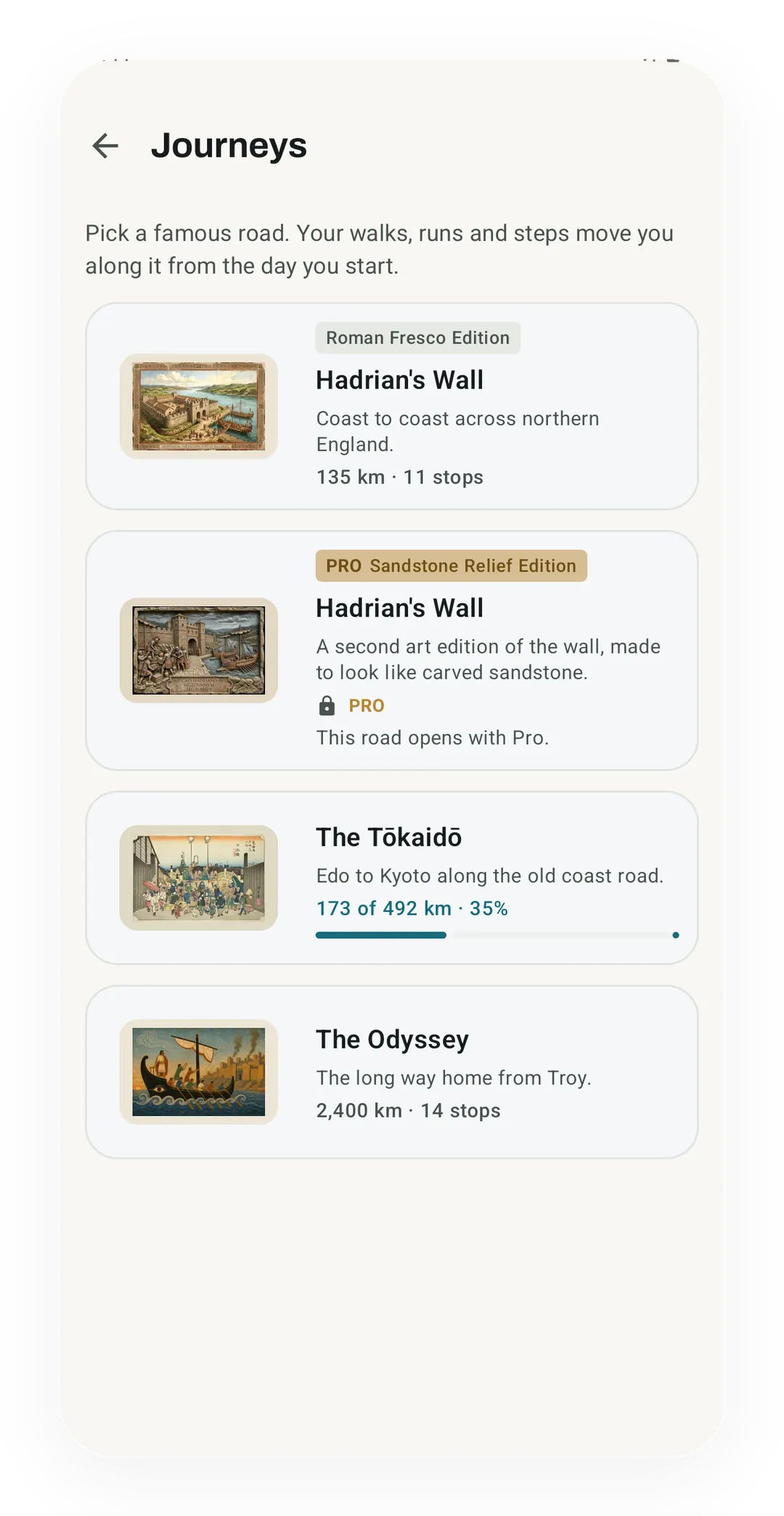
- Journeys. Your runs, walks, daily steps and classes move a marker along Hadrian’s Wall, the Tōkaidō or the Odyssey, and a picture opens at each stop. All three roads are free to finish. Gym work can count too if you turn it on, at 2,000 kg of logged volume for each kilometre.
- Skill Journeys and Rewards. Seven free paths lead to bodyweight moves such as a first pull-up, and free users earn short spells of Pro time by logging often.
What Kinoku does not do: there is no avatar, no XP and no story, and there is no friends feed or leaderboard. It runs on Android and Wear OS only, with no iPhone app yet, and some depth is paid, as the pricing page shows.
Workout Quest
Best for: Gym lifters who want XP and quests for every set.
Workout Quest calls itself a fitness RPG (role-playing game), and its home page says “The gamified workout tracker: log your sets, earn XP and loot, and race friends up the leaderboard.”
- What it does well. The home page says “Every set earns XP for your hero and levels up the muscles you trained.” The Play listing adds “Fitness RPG: Earn collectible cards with rarities as you train.”
- What its pages say about limits. Its support page says “The app works offline, so you can log workouts without a connection and sync later.” Its privacy policy lists “any workouts and related data that you have created” among the data it holds about you.
- Where it is the better pick. A lifter who wants every set to feed a hero, with quests and a friends leaderboard, on either phone platform, since “Workout Quest is free to download on iOS and Android.”
- Where Workout Quest differs. The Play listing says “As a premium member, you’ll benefit from AI-driven workout plans, customized based on your fitness history and goals.”
Games built on distance
These three reward the ground you cover on foot or on a bike, and none of them is built as a set-by-set gym log.
Pokémon GO
Best for: Walkers who want a reason to explore outside.
Pokémon GO is a location game now run by Scopely, whose terms name “Scopely Explore International Limited (formerly Niantic International Limited)”. Its Play listing asks you to “Join Trainers across the globe who are discovering Pokémon as they explore the world around them.”
- What it does well. The help center says “Place the Egg in an Incubator, and the Egg will hatch into a Pokémon as you walk.” With Adventure Sync turned on, “you’ll get weekly fitness reports to track your progress as well as earn rewards for reaching weekly milestones.”
- What its pages say about limits. The Play listing says “It is recommended to play while connected to a network in order to obtain accurate location information.” Adventure Sync asks you “to always enable location permissions and connect to either Apple Health or Google Fit.”
- Where it is the better pick. Someone who walks more when there is something to find, and who enjoys Raid Battles with other Trainers.
- Where Pokémon GO differs. It counts the kilometres you walk, and the listing says “This app is free-to-play and offers in-game purchases.”
Strava
Best for: Runners and riders who want monthly challenges, badges and a feed.
Strava records runs, rides and many other sports, and its App Store listing says “Strava makes fitness tracking social.”
- What it does well. The Play listing says “Join and Create Challenges: Participate in monthly challenges to chase new goals, collect digital badges and stay motivated while encouraging others.” Segments add leaderboards, and “Your Strava feed is filled with real efforts from real people.”
- What its pages say about limits. Its terms require an account before you can use the service, and its listing describes a free version beside a paid subscription with premium features.
- Where it is the better pick. A runner or rider who wants to race others on segments and follow friends’ efforts in a feed.
- Where Strava differs. Strength work arrives from elsewhere, because the listing says “Use your favorite device or strength app and your exercises, sets, reps, weights and a muscle map show up automatically.” Its support page says recording uses no data unless you view the maps or switch on its live features. Our Kinoku vs Strava page covers the run side in more depth.
Zombies, Run!
Best for: Runners and walkers who want a story to run through.
The zombie game is an audio adventure for running and walking, and its original creator, Naomi Alderman, took ownership of it in November 2025, according to its about page.
- What it does well. The Play listing says “You’re Runner 5, and through your headphones the story unfolds: rescue survivors, gather supplies, outrun the horde, and uncover the truth about the zombie apocalypse.” Supplies you pick up on the way trade “for trophies or buildings”.
- What its pages say about limits. The listing invites you to try it for free, with a subscription for every mission. It also says “Note: Continued GPS use in the background can decrease battery life.”
- Where it is the better pick. Someone who runs further with a story in their ears, on a road, a trail or a treadmill.
- Where the zombie game differs. Its terms keep “run history, and GPS run traces stored in your Zombies, Run! account” while the account stays active.
A game for any habit
This one rewards whatever you tick off, so a workout is one task among many.
Habitica
Best for: Turning any habit, fitness included, into a role-playing game.
The Habitica Play listing says “Habitica is a free habit-building and productivity app that uses retro RPG elements to gamify your tasks and goals.”
- What it does well. You check off a real task and the game pays out gold, experience and items, while missed habits cost you hit points. Social play comes from parties, since “Parties let you team up with friends for extra accountability and battle fierce foes by completing tasks”.
- What its pages say about limits. We found none on the pages we could read. In practice you tick off each task yourself, and the listing describes no log of sets, reps or runs.
- Where it is the better pick. Someone who wants one game for chores, study and training at once, with a Wear OS app on the watch.
- Where Habitica differs. Its App Store listing says “Habitica can be fully enjoyed for free, but if you would like to help support us, we offer optional in-app purchases and subscriptions.”
How this list was checked
Each claim about a rival app here rests on a sentence its maker publishes, on its website, help center, code repository, terms or store listing, and we opened and quoted each one on October 4, 2026. The sources list at the end holds each sentence, and a fact found in neither place is not on this page. We ran no device tests for this page, and Kinoku’s facts come from its own feature pages. The apps are grouped by what the game rewards and sit in alphabetical order inside each group, with no score and no winner.
Frequently asked questions
What is the best gamified fitness app?
No single app wins, because each game rewards something different. FitCraft and Workout Quest reward gym sessions, and Kinoku rewards the workouts, runs, walks and steps you log. Pokémon GO, Strava and Zombies, Run! reward distance, while Habitica rewards any habit you tick off yourself.
What is the best gamified app for lifting weights?
Workout Quest is built around the set, and its home page says every set earns XP for your hero and levels up the muscles you trained. FitCraft has an AI coach write the plan, then rewards finished sessions with quests and Exercise Cards. Kinoku gives strength and volume badges, long challenges and an optional Journey credit of 1 km for every 2,000 kg you lift.
What is the best gamified running app?
Zombies, Run! turns each run into an audio story mission, with chases and supplies to collect. Strava adds monthly challenges, digital badges and segment leaderboards. Kinoku’s Journeys move a marker along an illustrated road as your runs, walks, steps and classes add up.
Is there a gamified walking app?
Pokémon GO turns walking into the game, with eggs that hatch into Pokémon as you walk and weekly milestones through Adventure Sync. Kinoku’s Journeys count daily steps as well as tracked walks, so an ordinary day moves you along Hadrian’s Wall, the Tōkaidō or the Odyssey. Zombies, Run! also works at a walking pace, from a trail to a treadmill.
Which gamified fitness apps work offline?
Workout Quest’s support page says the app works offline and syncs later, and Kinoku logs workouts and runs with no network and no account. FitCraft’s own blog says its core features need an internet connection, and Pokémon GO recommends playing on a network for accurate location. Strava says recording uses no data unless you view the maps or turn on its live features.
Which gamified fitness apps need an account?
Strava’s terms say you must sign up and create an account and Pokémon GO’s terms say certain services need one, while Kinoku asks for no account at all. FitCraft, Workout Quest and Zombies, Run! mention accounts on their own pages without saying one is required, and the Habitica pages we could read say nothing either way.
Are gamified fitness apps free?
Most of these apps pair a free start with a paid layer. Zombies, Run! is free to try with a subscription for every mission, Pokémon GO is free-to-play with in-game purchases, and Habitica is free with optional purchases. FitCraft, Strava and Workout Quest each sell a subscription or premium plan, and Kinoku is free with an optional Pro plan that adds depth.
Which gamified fitness apps work on both Android and iPhone?
Six of the seven apps here run on both phone platforms: FitCraft, Habitica, Pokémon GO, Strava, Workout Quest and Zombies, Run!. Kinoku runs on Android and Wear OS only, with no iPhone app yet. Habitica also has a Wear OS app, and Strava supports Wear OS 3.0 and above.
What is a fitness RPG?
A fitness RPG (role-playing game) gives you a character that grows as you train, with levels, gear and quests. Habitica applies that idea to any habit, and Workout Quest calls itself a fitness RPG, with XP for every set, quests and collectible cards. FitCraft levels up an avatar as you train.
Can a gamified app use the workouts I already track?
Some can, each in its own way. Pokémon GO’s Adventure Sync connects to Apple Health or Google Fit, and Strava shows strength sessions from another device or app. Habitica asks you to tick each task off yourself. Kinoku is the workout log itself, so its badges and Journeys use the sessions, runs and steps it already records.
Does Kinoku have streaks and badges?
Yes. Kinoku has 132 achievements across 13 groups, from consistency streaks to strength, endurance and secret badges, and most step up through Bronze, Silver and Gold. The step tracker keeps daily streaks, and the Your Story deck shows your longest run of training days for the month or the year. Kinoku has no avatar and no XP.
What does Kinoku leave out that game apps have?
Kinoku has no avatar, no story, no XP and no friends feed or leaderboard, so the game stays on your own record. The app runs on Android and Wear OS only for now. Some depth is paid, since Pro adds 24 achievement definitions, the Achievement Timeline, 6 challenge templates, challenge insights and the Sandstone Relief edition of Hadrian’s Wall.
Is there a gamified app that works for both the gym and running?
Kinoku rewards both in one record: its badges cover strength, volume and endurance, and a Journey can move on runs, walks, steps and classes, or credit 1 km for every 2,000 kg you lift. FitCraft and Workout Quest reward gym sessions, while Zombies, Run! and Pokémon GO reward distance. Strava runs monthly challenges with digital badges, and it can show strength sessions from another app.
Is there a gamified fitness app with no account and no subscription?
Kinoku states both on its own pages: it asks for no account, and most of its badges and challenges, plus all three Journeys roads, are free. An optional Pro plan adds 24 badges, 6 challenge templates and one Journey edition. Habitica is free with optional purchases, though the pages we read do not say whether it needs an account. Zombies, Run! sells a subscription that opens every mission, and Strava requires an account.
Related pages
- Best offline workout tracker apps for Android: which apps log a set with no network.
- Best workout apps without an account
- Best apps for lifting and running in one app
- Best Strava alternatives
- Kinoku vs Strava
- Achievements in Kinoku, Challenges and Journeys
- Momentum: the parts of Kinoku that show your training adding up, from badges and roads to a story of your year.
- Free workout year in review apps: Yearly recaps of streaks and records, and when each app shows one.
Which one fits you
- Choose FitCraft if you want an AI coach to write and adjust the plan, with quests and Exercise Cards for finishing it.
- Choose Kinoku if you want badges, long challenges and illustrated map journeys on top of a full workout and run log, with no account.
- Choose Workout Quest if you lift in a gym and want every set to earn XP and level up the muscles you trained.
- Choose Pokémon GO if you want walking to turn into exploring, with eggs that hatch as the kilometres add up.
- Choose Strava if you run or ride and want monthly challenges, digital badges and a feed of friends.
- Choose Zombies, Run! if you want each run or walk to be a story mission in your headphones.
- Choose Habitica if you want one game for every habit, with workouts as one task among many.
How this page is checked. Every fact about another app on this page comes from a page that app publishes, which we could open and quote on October 4, 2026. The sources, with the exact sentence each fact rests on, are listed just above. Every Kinoku fact is tied to the shipping app's code. The page carries no score; the apps are grouped by what their own pages say. If a fact here has gone stale, the support page is the fastest way to tell us.
Kinoku in practice
Where this shows up in the app
 Open full-size image ↗
Kinoku's achievement ladder
The Achievements screen counts 56 of 104 tiers earned so far, and each card shows a badge, its group and its progress.
 Open full-size image ↗
Pick a road to walk
All three Journeys roads are free, with Hadrian's Wall in its Roman Fresco edition. Its Sandstone Relief edition is part of Pro.
One of the apps on this page
Kinoku is free to install
Core tracking works offline, with no account. An export from the app you use today can come along.
Android only for now, with an iPhone version in the works. Some depth is paid, and the pricing page says which parts.
Related features
132 achievements across 13 groups. The whole ladder stays visible; 24 of them and the Achievement Timeline require Pro.
41 templates across many data sources, with deeper detail as your tier goes up.
Walk Hadrian's Wall, the Tōkaidō or the Odyssey with your everyday distance. Reach a stop and uncover its picture.